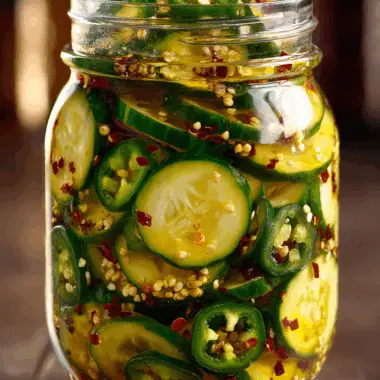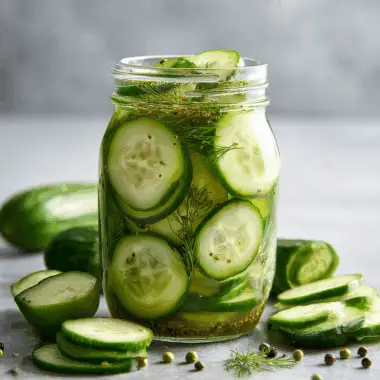

Bread and Butter Pickle Spears are a tangy, sweet, and crunchy snack that pairs perfectly with burgers, barbecue, or a charcuterie board. Unlike traditional sour dill pickles, these spears feature a mild tartness balanced with sugar and warm spices like mustard seed and turmeric. Popular in Southern cooking and canning traditions, they are easy to prepare and store well in the fridge.
FULL RECIPE
Ingredients
- 4 cups pickling cucumbers (about 6 medium cucumbers), cut into spears
- 1 large yellow onion, thinly sliced
- 1/4 cup pickling salt or kosher salt
- 2 cups granulated sugar
- 2 cups white vinegar
- 1/2 cup apple cider vinegar
- 1 tablespoon mustard seeds
- 1 teaspoon celery seeds
- 1/2 teaspoon ground turmeric
- 1/2 teaspoon crushed red pepper flakes (optional, for a spicy kick)
- 1/2 teaspoon whole black peppercorns
- Ice water
Directions
- Prepare the cucumbers and onions: Place the cucumber spears and sliced onions in a large bowl. Sprinkle with pickling salt and cover with ice water. Let sit for 2–3 hours to draw out excess moisture and keep the pickles crisp.
- Drain and rinse: After soaking, drain the cucumbers and onions well and rinse under cold water to remove excess salt. Set aside to drain completely.
- Make the brine: In a large stainless steel or non-reactive pot, combine the sugar, white vinegar, apple cider vinegar, mustard seeds, celery seeds, turmeric, crushed red pepper flakes, and black peppercorns. Bring the mixture to a boil over medium-high heat, stirring to dissolve the sugar.
- Pack the jars: If you’re canning, sterilize jars ahead of time. Pack the drained cucumber spears and onions into jars, leaving about 1/2-inch headspace. Pour the hot brine over the cucumbers, making sure to submerge them completely.
- Seal the jars: For refrigerator pickles, let jars cool to room temperature, then seal and refrigerate. For shelf-stable pickles, process sealed jars in a boiling water bath for 10 minutes, then allow to cool.
- Curing time: Let the pickles sit for at least 24 hours before eating, but for best flavor, wait 5–7 days. Store in the fridge for up to 3 months (or up to 1 year if canned).
Nutrition Facts
- Calories: 35
- Total Fat: 0g
- Saturated Fat: 0g
- Cholesterol: 0mg
- Sodium: 220mg
- Total Carbohydrates: 8g
- Dietary Fiber: 0g
- Sugars: 7g
- Protein: 0g
- Vitamin C: 2% DV
- Calcium: 1% DV
- Iron: 1% DV
Flavor Profile and Texture
The hallmark of bread and butter pickles is their balanced sweet and tangy taste, achieved through a combination of vinegar, sugar, and spices. Turmeric adds a slight earthy warmth and a golden hue, while mustard seeds and celery seeds contribute subtle bitterness and aroma. These pickles have a crunchy bite due to soaking the cucumbers in a saltwater or ice brine prior to pickling. When prepared correctly, each spear delivers a satisfying snap followed by layers of flavor that are at once bright, sweet, slightly acidic, and spicy if chili flakes are included.
Health Benefits and Nutritional Value
While bread and butter pickles are not a significant source of macronutrients, they can still be a healthy addition to your diet when consumed in moderation. Cucumbers, the base ingredient, are naturally low in calories and contain antioxidants and small amounts of vitamins K and C. The vinegar used in pickling can aid digestion by stimulating stomach acid production. However, it’s important to note the high sugar and sodium content, especially in commercially made varieties. Homemade versions offer better control over these components, making them a smarter choice for health-conscious consumers.
Homemade Versus Store-Bought
One of the biggest advantages of making bread and butter pickles at home is the ability to tailor ingredients to personal preference. Homemade pickles often have fewer preservatives, less sugar, and no artificial coloring compared to store-bought counterparts. You can also adjust spice levels, vinegar types, and even the thickness of the spears. Store-bought varieties offer convenience and consistency, but they rarely match the freshness and crunch of a homemade batch. For those interested in food preservation or wanting to avoid unnecessary additives, home pickling is a rewarding and economical option.
Creative Variations to Try
Bread and butter pickles are incredibly adaptable, allowing for a wide range of variations. You can add sliced jalapeños or chili flakes for a spicy kick, or throw in cloves of garlic for depth. Swapping out white vinegar for apple cider vinegar or rice vinegar can yield subtle flavor shifts. Some recipes include red bell pepper slices or carrots for color and sweetness. You can also experiment with different shapes, such as pickle chips or sandwich-length slices, depending on how you plan to use them. The base recipe serves as a flexible canvas for culinary creativity.
Serving Suggestions
These pickles are incredibly versatile and can be served in a variety of ways. They’re a perfect match for burgers, pulled pork sandwiches, and fried chicken, where their sweetness cuts through the richness of the meat. They also shine on a charcuterie board, offering a tangy contrast to cheeses and cured meats. For a simple snack, enjoy them straight from the jar, or dice them into tuna salad or egg salad for added crunch and flavor. Even a grilled cheese sandwich can benefit from a few slices tucked inside for a zesty surprise.
Pairings with Drinks and Dishes
Bread and butter pickle spears complement a wide array of beverages and meals. Their sweet-acidic profile pairs beautifully with smoky barbecue, spicy sausages, or fatty cuts of meat like brisket. On the beverage side, they go well with light lagers, sour beers, or crisp white wines such as Sauvignon Blanc or Riesling. For non-alcoholic options, try serving them alongside iced tea or a vinegar-forward shrub drink. Their ability to enhance both heavy and light dishes makes them a dynamic addition to almost any menu.
Proper Storage and Shelf Life
Proper storage is key to maintaining the freshness and crunch of your bread and butter pickle spears. Refrigerator pickles should be stored in clean, airtight glass jars and kept in the fridge, where they’ll remain good for up to 3 months. If processed using a water bath canning method, sealed jars can be stored in a cool, dark place for up to a year. Always check for signs of spoilage—such as cloudiness, mold, or off smells—before consuming. Using sterilized jars and utensils is essential to ensure food safety and extend shelf life.
Seasonal and Ingredient Considerations
The best time to make bread and butter pickles is during peak cucumber season, typically in the summer months. Choose firm, small cucumbers, preferably pickling varieties like Kirby or Persian, which hold their crunch better than slicing cucumbers. Freshness is crucial—the firmer and fresher the cucumber, the crisper the end product. Onions should also be fresh and firm; yellow onions are traditional, but red or sweet onions can offer a different flavor twist. Choosing organic or locally grown produce ensures better taste and fewer pesticides.
Sustainability and Waste Reduction
Making your own pickles is a smart way to reduce kitchen waste and make the most of seasonal produce. If you find yourself with an abundance of cucumbers, pickling is an excellent preservation method. Additionally, any leftover brine can be reused to quick-pickle other vegetables like carrots, green beans, or even hard-boiled eggs. The process encourages zero-waste cooking by utilizing jars, leftover veggies, and even onion peels (which can be composted). It also reduces reliance on single-use plastic packaging typically found in store-bought pickles.
Conclusion
Bread and butter pickle spears are more than just a nostalgic snack—they’re a flavorful, functional addition to any culinary repertoire. Their sweet-tangy crunch complements a wide range of dishes, from smoky barbecue to humble sandwiches. Making them at home offers control over ingredients, flavors, and freshness while promoting sustainability and mindful eating. With countless variations and uses, these pickles are a pantry staple worth mastering. Whether you’re a seasoned canner or a curious beginner, a jar of homemade bread and butter pickle spears is a delicious investment in taste, tradition, and creativity.