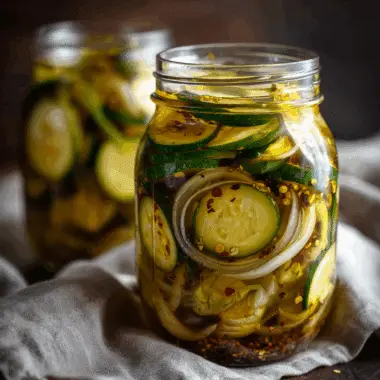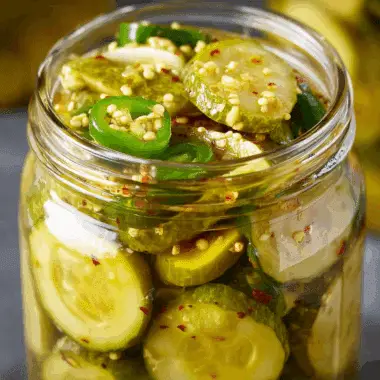

Old-Fashioned Bread and Butter Pickles are a beloved classic in the world of home canning, known for their perfect balance of sweetness and tang. Originally popularized during the Great Depression when ingredients were scarce, these pickles got their name because they were often served with slices of bread and butter as a simple sandwich. Made with crisp cucumbers, onions, and a sweet-spicy brine, this recipe captures that traditional flavor in every bite.
FULL RECIPE
Ingredients
- 4 cups thinly sliced pickling cucumbers (about 1 ½ pounds)
- 1 ½ cups thinly sliced onions
- ¼ cup canning or kosher salt
- Ice cubes
- 2 cups granulated sugar
- 1 ½ cups distilled white vinegar (5% acidity)
- ½ cup apple cider vinegar
- 1 tablespoon mustard seeds
- 1 teaspoon celery seeds
- 1 teaspoon ground turmeric
- ½ teaspoon crushed red pepper flakes (optional, for a spicier kick)
Directions
- Prep the Cucumbers and Onions: In a large non-reactive bowl, combine the sliced cucumbers and onions. Sprinkle with salt, toss well, and cover with ice cubes. Let sit for 1½ to 2 hours to draw out excess moisture.
- Drain and Rinse: After soaking, drain the cucumber mixture thoroughly and rinse under cold water to remove excess salt. Drain again and set aside.
- Make the Brine: In a large pot, combine the sugar, white vinegar, apple cider vinegar, mustard seeds, celery seeds, turmeric, and crushed red pepper flakes (if using). Bring the mixture to a boil over medium-high heat, stirring to dissolve the sugar.
- Cook the Pickles: Add the drained cucumbers and onions to the hot brine. Return to a simmer and cook for 5 minutes, stirring occasionally, until the cucumbers are just tender but still crisp.
- Pack the Jars: Using a slotted spoon, pack the hot vegetables into sterilized pint jars, leaving about ½ inch of headspace. Pour the hot brine over the vegetables, making sure they are fully submerged, and maintain the headspace.
- Seal the Jars: Wipe the rims of the jars clean, apply the lids, and screw on the bands until fingertip tight.
- Process (Optional for Shelf Storage): For long-term storage, process the sealed jars in a boiling water bath for 10 minutes. Remove and let cool completely.
- Cool and Store: Let the jars sit at room temperature for 12–24 hours. Check seals before storing in a cool, dark place. Unprocessed jars must be kept refrigerated. For best flavor, allow pickles to rest for at least one week before opening.
Nutrition Facts
Serving Size: 1/4 cup (60g)
- Calories: 70
- Total Fat: 0g
- Saturated Fat: 0g
- Trans Fat: 0g
- Cholesterol: 0mg
- Sodium: 420mg
- Total Carbohydrates: 18g
- Dietary Fiber: 1g
- Sugars: 17g
- Protein: 0g
- Vitamin A: 2% DV
- Vitamin C: 4% DV
- Calcium: 2% DV
- Iron: 2% DV
Flavor Profile and Culinary Appeal
Bread and Butter Pickles are beloved for their unique blend of sweet, tangy, and slightly spicy flavors. The combination of sugar, vinegar, mustard seeds, turmeric, and optional chili flakes gives these pickles their signature complexity. Unlike dill pickles, which focus more on sharp sourness and garlic, bread and butter pickles provide a milder, sweeter alternative that appeals to a broader audience, including children and those averse to overly sour tastes. The balance of sugar and vinegar offers a refreshing contrast that enhances both simple and elaborate dishes.
Health Benefits and Nutritional Value
While pickles are not typically viewed as health foods due to their sugar and sodium content, bread and butter pickles do offer certain benefits. Cucumbers are low in calories and contain antioxidants, vitamins, and minerals such as vitamin K, which supports bone health. The vinegar used in the brine has antimicrobial properties and may assist with digestion and blood sugar regulation. However, due to their added sugar and salt, moderation is key. Homemade versions are often healthier than store-bought, as you can control the levels of sugar and sodium.
Serving Suggestions and Usage Ideas
Bread and Butter Pickles are incredibly versatile. They can be layered on burgers, chopped into chicken or tuna salad, or served as a tangy-sweet component in charcuterie boards. Their crunch and sweetness complement grilled meats, especially barbecue pork or pulled chicken sandwiches. Some home cooks also use them as a topping for deviled eggs or as a flavorful addition to cold pasta salads. For a twist, chop them finely and mix into tartar sauce or relishes to upgrade seafood dishes like fried fish or crab cakes.
Popular Variations of the Classic Recipe
There are many creative takes on traditional Bread and Butter Pickles. Some recipes incorporate green bell peppers or jalapeños for a spicier version, while others experiment with brown sugar or honey instead of white sugar to add depth. You might also find pickles made with apple cider vinegar alone, offering a fruitier undertone. Modern adaptations include low-sugar or keto-friendly versions using sugar substitutes, allowing those with dietary restrictions to enjoy the classic flavor. Additionally, adding herbs like dill or thyme can lend a fresh, aromatic layer to the pickles.
Pairing Ideas with Meals and Beverages
Bread and Butter Pickles pair well with a variety of savory dishes thanks to their sweetness and acidity. They’re ideal companions to fried or grilled foods, as their tang cuts through richness. Try pairing them with Southern fried chicken, smoked brisket, or a thick grilled cheese sandwich. In terms of beverages, these pickles go surprisingly well with light beers, iced tea, or crisp white wines like Riesling. For a party platter, serve them alongside sharp cheeses like cheddar or gouda to create an interplay of flavors and textures.
Storage Recommendations for Optimal Freshness
To ensure the longest shelf life and best flavor, Bread and Butter Pickles should be stored properly. When canned using a boiling water bath method, they can last up to a year in a cool, dark place such as a pantry. Once opened or if stored in the refrigerator without processing, they should be consumed within 2–3 months for optimal texture and taste. Always use clean utensils when removing pickles from the jar to prevent contamination. Over time, pickles may lose their crunch, but they remain safe to eat if properly stored.
Tips for Getting the Perfect Texture
Achieving a satisfying crunch is one of the hallmarks of a great Bread and Butter Pickle. Start with very fresh, firm pickling cucumbers—overripe or wax-coated varieties will result in mushy pickles. Salting and icing the sliced cucumbers before pickling helps draw out moisture and firms them up. Also, avoid overcooking the cucumbers in the brine. Simmering them for just a few minutes is enough to infuse flavor without sacrificing crunch. Some experienced picklers add calcium chloride (pickle crisp granules) to further preserve crispness in canned jars.
Canning Safety and Shelf-Stable Techniques
If you plan to make a large batch of Bread and Butter Pickles for pantry storage, proper canning technique is essential. Sterilize jars and lids, use vinegar with at least 5% acidity, and maintain the right headspace in jars to ensure a vacuum seal. A water bath canner should be used to process the filled jars for at least 10 minutes to kill bacteria and ensure shelf stability. Once processed and sealed, the jars should be allowed to rest undisturbed for 12–24 hours before storing. Always check seals before consuming long-term canned goods.
Why Homemade is Better Than Store-Bought
Making Bread and Butter Pickles at home allows for complete control over flavor, texture, and ingredients. Many store-bought versions contain preservatives, artificial colors, and excess sugar or salt. Homemade pickles can be customized to dietary needs and personal taste preferences, from tweaking the spice level to using organic produce. They also tend to have a fresher, crisper quality when prepared and consumed within a few months. For many, the process of pickling itself is a rewarding and therapeutic kitchen activity that connects them to tradition and family heritage.
Conclusion
Bread and Butter Pickles are more than just a nostalgic condiment—they’re a culinary staple that bridges generations with their sweet and tangy charm. From enhancing everyday meals to elevating party spreads, these pickles offer flavor, crunch, and versatility in every bite. Homemade versions bring the added benefit of ingredient control, creativity, and freshness. Whether you’re a seasoned canner or a curious beginner, making your own batch is a deeply satisfying way to enjoy this time-honored treat. With proper preparation and storage, these pickles can be a year-round delight in your kitchen.