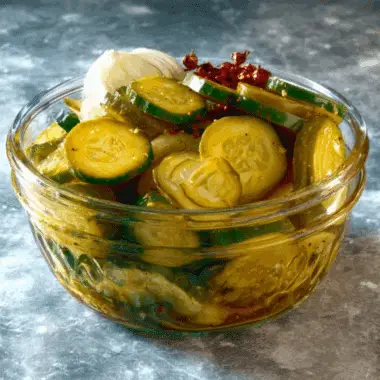

Bread and butter pickles are a timeless favorite with their irresistible balance of sweet, tangy, and slightly spiced flavors. Unlike traditional pickles that require days to ferment, this quick 30-minute recipe yields crisp, flavorful pickles perfect for burgers, sandwiches, or as a stand-alone snack. The name “bread and butter” comes from their popularity during the Great Depression when they were often eaten between slices of bread and butter as an affordable meal.
FULL RECIPE
Ingredients:
- 4 cups sliced pickling cucumbers (about 4 small cucumbers)
- 1 cup thinly sliced yellow onion
- 1 tablespoon kosher salt
- 1 ½ cups apple cider vinegar
- 1 cup granulated sugar
- ½ teaspoon ground turmeric
- ½ teaspoon mustard seeds
- ½ teaspoon celery seeds
- ¼ teaspoon crushed red pepper flakes (optional)
- Ice cubes (for brining)
Directions
- In a large bowl, combine the sliced cucumbers and onions. Sprinkle with kosher salt and toss to coat evenly.
- Add a few handfuls of ice cubes on top of the cucumber mixture and let it sit for 15–20 minutes to crisp up.
- Meanwhile, in a medium saucepan, combine the apple cider vinegar, sugar, turmeric, mustard seeds, celery seeds, and crushed red pepper flakes (if using).
- Bring the vinegar mixture to a boil over medium-high heat, stirring occasionally to dissolve the sugar completely.
- Drain and discard the ice from the cucumber mixture. Pat the cucumbers and onions dry using paper towels to remove excess moisture.
- Carefully pour the hot vinegar brine over the cucumber and onion mixture. Let sit for about 10 minutes to cool slightly and infuse the vegetables with flavor.
- Transfer the pickles and brine into clean glass jars with lids. Allow to cool to room temperature.
- Refrigerate for at least 1 hour before serving. For best flavor and crunch, enjoy within 2 weeks.
- Serve cold with sandwiches, grilled meats, or as a tangy side.
Nutrition Facts
- Calories: 60
- Total Fat: 0g
- Saturated Fat: 0g
- Cholesterol: 0mg
- Sodium: 380mg
- Total Carbohydrates: 15g
- Dietary Fiber: 1g
- Sugars: 14g
- Protein: 0g
- Vitamin A: 2% DV
- Vitamin C: 4% DV
- Calcium: 2% DV
- Iron: 2% DV
The Origins of Bread and Butter Pickles
Bread and butter pickles have a long-standing place in American culinary history. Their origins trace back to the early 20th century, with the name believed to have originated during the Great Depression when the pickles were eaten between slices of bread and butter for a cheap but flavorful meal. Unlike dill pickles, these are sweeter, milder, and often infused with warm spices like turmeric and mustard seeds. Their nostalgic flavor and ease of preparation have kept them a favorite for generations.
Why Quick Pickling Works
The method used in this recipe is called “quick pickling,” which relies on vinegar and sugar rather than fermentation. It allows for faster preparation—under 30 minutes—without sacrificing flavor or texture. The hot brine penetrates the vegetables quickly, ensuring they absorb the tangy-sweet flavors almost immediately. This method is ideal for home cooks who want to enjoy pickles the same day without the wait and upkeep required for fermented versions.
Nutritional Highlights of Pickled Cucumbers
While pickles are generally low in calories, they can be surprisingly nutritious. Cucumbers retain some of their natural fiber and water content even after pickling. The addition of vinegar brings acetic acid, which may aid digestion and blood sugar regulation. However, it’s important to be mindful of the sugar and sodium content—particularly in sweet pickles like bread and butter varieties. Moderation is key, and even small servings can add flavor without too much impact on daily nutritional goals.
Flavor Profile and Sensory Appeal
What sets bread and butter pickles apart is their balanced flavor. They are not as sour as traditional pickles, offering instead a mild sweetness complemented by warm spices like turmeric, mustard seeds, and sometimes celery seeds or chili flakes. This combination provides a nuanced taste experience—crisp, sweet, slightly tangy, and faintly spicy. The onions included in many recipes also soften and soak up the brine, adding another layer of texture and flavor.
Serving Suggestions and Creative Uses
Bread and butter pickles are highly versatile and can be used in more than just sandwiches. They’re a delicious topping for burgers and hot dogs, a great addition to cheese and charcuterie boards, and even a surprising ingredient in potato or tuna salad. You can also chop them up to mix into tartar sauce, egg salad, or deviled eggs. Their sweet and tangy profile makes them an excellent contrast to rich, fatty, or salty foods.
Perfect Pairings with Other Foods
Pairing bread and butter pickles with the right dishes can elevate a meal. They work exceptionally well alongside fried chicken, grilled cheese sandwiches, smoked meats, or Southern-style barbecue. The acidity and sweetness help cut through the richness of fatty meats and fried foods. For a lighter meal, try pairing them with a sharp cheddar cheese or roasted vegetables—the pickles add brightness that enhances both simple and complex flavors.
Customizing the Recipe to Suit Your Taste
One of the best things about homemade pickles is how easy they are to customize. If you prefer more heat, you can add extra crushed red pepper flakes or fresh chili slices. For a tangier brine, reduce the sugar or increase the vinegar slightly. You can also experiment with spices—cloves, coriander, or allspice can introduce new flavor notes. Changing the type of onion (red vs. yellow) or cucumber (Kirby vs. English) also alters the final taste and texture.
Storage and Shelf Life Tips
Since this is a quick pickle recipe, it should be stored in the refrigerator, not on pantry shelves like traditional canned pickles. Use clean, airtight glass jars for best results. These pickles typically last up to two weeks in the fridge, though they’re often consumed much sooner due to their addictive flavor. Always use a clean fork when serving to avoid introducing bacteria that can shorten shelf life or spoil the pickles prematurely.
Tips for Maintaining Crispness
Maintaining the crisp texture of the cucumbers is essential for an enjoyable pickle. Salting the cucumbers and letting them sit with ice beforehand helps draw out excess moisture, making them firmer. Also, pouring hot (not boiling) brine over the cucumbers instead of cooking them ensures they stay snappy. Avoid over-soaking the cucumbers, as prolonged exposure to liquid can cause them to soften over time, especially if the slices are too thin.
Eco-Friendly and Cost-Effective Option
Making your own bread and butter pickles at home is more sustainable and budget-friendly than buying store-bought jars. You can reuse glass containers, avoid excess packaging, and minimize food waste by pickling cucumbers before they spoil. Homemade pickles also contain no preservatives or artificial coloring, offering a cleaner label option for families who value fresh, natural ingredients. Plus, buying cucumbers in bulk or growing them at home makes the cost per jar significantly lower.
Conclusion
Crisp bread and butter pickles are a delightful addition to any meal, offering a nostalgic yet versatile flavor that complements a wide array of dishes. Their quick preparation time, minimal ingredients, and customizable profile make them ideal for home cooks of all skill levels. Beyond just a condiment, they serve as a creative culinary tool to add brightness, texture, and complexity to your plate. Whether you enjoy them straight from the jar or as part of your favorite sandwich, these pickles are a timeless favorite with enduring appeal.