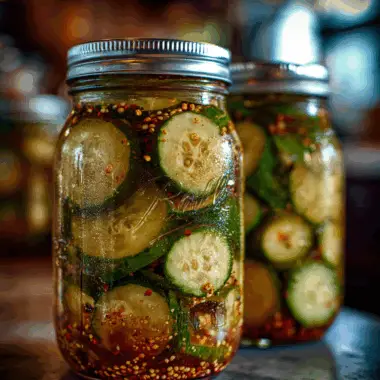

Bread and butter pickles are a classic sweet-and-sour treat that dates back to the early 20th century. Beloved for their tangy crunch and vibrant flavor, these quick pickles are made using cucumbers, onions, and a brine rich with sugar, vinegar, and spices. Despite their name, they contain neither bread nor butter — instead, they pair wonderfully with both. Ideal as a burger topper, sandwich filler, or a stand-alone snack, these refrigerator pickles require no canning and are ready to eat in just 24 hours.
FULL RECIPE
Ingredients
- 4 cups thinly sliced pickling cucumbers (about 4 small cucumbers)
- 1 cup thinly sliced yellow onion
- 1 tablespoon kosher salt
- 1 cup white granulated sugar
- 1 cup white vinegar
- ½ cup apple cider vinegar
- ¼ cup light brown sugar, packed
- 1 teaspoon mustard seeds
- ½ teaspoon celery seeds
- ½ teaspoon ground turmeric
- ¼ teaspoon ground cloves (optional)
- ¼ teaspoon crushed red pepper flakes (optional, for heat)
Directions
- In a large mixing bowl, combine sliced cucumbers and onions. Sprinkle with kosher salt and toss to coat. Let sit for 1 hour, stirring occasionally. This helps draw out excess water and enhances the pickle’s crunch.
- After 1 hour, drain the cucumber and onion mixture well and rinse briefly under cold water. Pat dry with a clean towel or paper towels.
- In a medium saucepan over medium heat, combine white sugar, brown sugar, white vinegar, apple cider vinegar, mustard seeds, celery seeds, turmeric, and cloves. Stir until the sugar dissolves completely and the mixture just begins to boil.
- Add the drained cucumbers and onions to the hot brine. Stir to combine and heat for 1–2 minutes — do not let the mixture boil again.
- Remove from heat and let cool to room temperature, about 30 minutes.
- Transfer pickles and brine into clean glass jars or airtight containers. Seal and refrigerate.
- Let the pickles chill for at least 24 hours before eating for best flavor. They can be stored in the refrigerator for up to 4 weeks.
Nutrition Facts
- Calories: 70
- Total Fat: 0g
- Saturated Fat: 0g
- Cholesterol: 0mg
- Sodium: 320mg
- Total Carbohydrates: 18g
- Dietary Fiber: 1g
- Sugars: 16g
- Protein: 0g
- Vitamin C: 2% DV
- Iron: 1% DV
- Potassium: 80mg
- Calcium: 2% DV
Flavor Profile and Appeal
Quick bread and butter pickles are renowned for their sweet-tangy balance and crunchy texture, making them irresistible to many palates. Unlike dill pickles, which lean more toward sour and briny, bread and butter pickles incorporate a sugar-heavy brine that transforms cucumbers and onions into a subtly spicy, aromatic snack. The addition of turmeric, mustard seeds, and celery seeds adds complexity, creating a flavorful burst in every bite. This contrast of sugary sharpness with just a hint of warmth and spice makes them perfect for both casual snacking and gourmet culinary applications.
Nutritional Benefits
Though pickles are not typically seen as a nutrient-dense food, bread and butter pickles made with cucumbers offer a few health perks. Cucumbers are low in calories and a source of hydration due to their high water content. Additionally, turmeric, a key ingredient in this recipe, contains curcumin, which is known for its anti-inflammatory and antioxidant properties. Mustard and celery seeds also bring in trace minerals and plant compounds that may aid digestion. When consumed in moderation, these pickles can be a tangy way to support your gut with fermented vinegar and spice-derived micronutrients.
Homemade Versus Store-Bought
One of the biggest advantages of making bread and butter pickles at home is the ability to control the ingredients and adjust the recipe to suit dietary preferences. Commercial brands often include high-fructose corn syrup or preservatives, while a homemade version uses straightforward pantry staples like white and apple cider vinegar, pure cane sugars, and whole spices. Furthermore, homemade pickles allow for fresher cucumbers and customizable spice blends, ensuring better flavor and texture. Plus, the joy of preparing your own pickles adds a sense of accomplishment that store-bought jars simply can’t provide.
Creative Variations
There are numerous ways to personalize bread and butter pickles. For a spicy kick, red pepper flakes or sliced jalapeños can be added to the brine. If you’re reducing sugar intake, a blend of alternative sweeteners such as stevia or honey may be used, keeping in mind that this will affect the flavor balance. Carrots, bell peppers, or thinly sliced radishes make great additions to diversify the texture and color profile. You can even swap apple cider vinegar with rice vinegar for a more mellow tang, or use red onions instead of yellow for deeper flavor and visual contrast.
Best Serving Ideas
These sweet and tangy pickles shine in a variety of dishes. They’re a classic topping for burgers and sandwiches, especially pulled pork or grilled cheese, where their acidity cuts through richness. Try them as a component in a relish tray, paired with cheeses and cured meats for a vibrant charcuterie board. They also elevate Southern favorites like fried chicken, deviled eggs, and cornbread. In salads, they bring crunch and brightness, while a spoonful of the brine can even be used to jazz up vinaigrettes and potato salads.
Ideal Pairings
When thinking about pairings, bread and butter pickles match wonderfully with fatty, savory, and smoky foods. The sweetness pairs well with barbecue ribs, brisket, and smoked sausages. On the beverage side, they go well with hoppy beers, crisp ciders, or sparkling wines that balance their sugar and acidity. For vegetarian meals, these pickles complement hummus wraps, grilled tofu, or even hearty grain bowls. Their versatility means they can stand in both rustic comfort meals and refined modern plates.
Tips for Perfect Texture
Achieving the perfect crunch starts with selecting the right type of cucumbers. Kirby or pickling cucumbers are preferred for their small size and firm texture. It’s important not to skip the salting step — allowing the cucumbers and onions to sit with salt draws out excess moisture, which helps maintain crispness. Additionally, the brief heating of the cucumbers in the brine without boiling them is key. Overheating will soften the vegetables and result in limp pickles. Cooling the brine before sealing also helps retain that fresh snap.
Proper Storage Techniques
Since these are refrigerator pickles and not processed through traditional canning, proper storage is essential for food safety and quality. Store the pickles in clean, airtight glass jars or BPA-free plastic containers in the refrigerator. Avoid metal containers, as the vinegar may react with the surface. Once stored, they should remain good for up to four weeks. Always use a clean utensil to remove pickles from the jar to prevent contamination, and check for off smells or changes in texture as indicators they may have gone bad.
Time-Saving Tips
One of the appealing aspects of quick pickles is how little time they take to prepare. For even faster preparation, use a mandoline slicer to ensure uniform cucumber and onion slices. If you’re short on time, you can let the pickles marinate for just a few hours rather than a full day, though the flavor will intensify with more time. Doubling the batch is another smart approach—once you’ve done the slicing and brining, the same effort yields twice the reward. Consider prepping extra and giving jars as gifts or storing for future meals.
Cultural Significance and Popularity
Bread and butter pickles are a cherished staple in many American households, with roots tracing back to the Great Depression when preserving food was a necessity. The name reportedly comes from cucumber bartering — farmers would trade jars of pickles for essentials like bread and butter. Their nostalgic flavor and simple preparation have helped them endure through generations. Today, they’re still beloved across the country and often appear at summer cookouts, tailgates, and holiday tables, continuing their legacy as a humble yet iconic American food.
Conclusion
Quick bread and butter pickles are more than just a tangy snack — they’re a testament to timeless flavor, resourcefulness, and kitchen creativity. Whether you’re making them for the first time or reviving a family tradition, these pickles offer a delightful blend of sweetness, spice, and crunch that enhances everything from sandwiches to side dishes. With simple ingredients and endless opportunities for customization, this versatile condiment fits into both classic comfort meals and contemporary cuisine. Keep a jar in your fridge, and you’ll always have a pop of flavor ready to go.