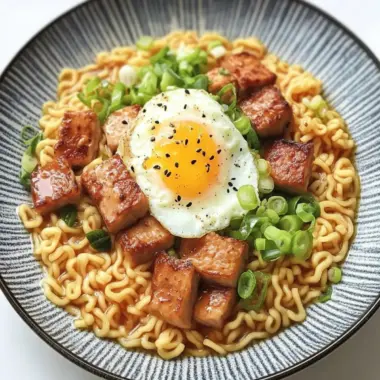
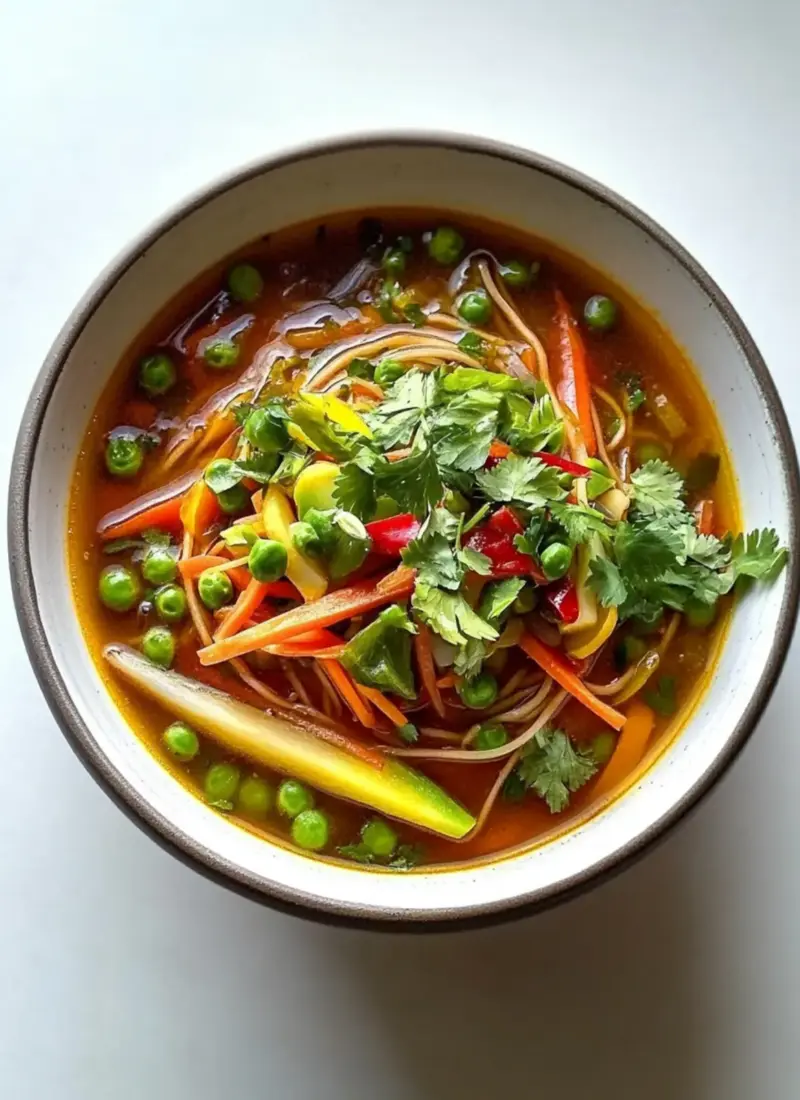
Picture this: a chilly evening, and the scent of garlic and ginger wafts through the kitchen, beckoning you closer. That’s the magic of Vegetable Thukpa (Tibetan Noodle Soup) – a comforting bowl of vibrant flavors that warms not just your body but also your soul. I whipped up this delicious soup one hectic weeknight when I craved something nourishing yet quick to prepare. In just 15 minutes, you can indulge in this delicious vegetarian delight, overflowing with vegetables and perfectly spiced broth.
The best part? You have the freedom to customize it to your liking! Whether you’re cleaning out your fridge or seeking a hearty meal the whole family will love, this adaptable recipe has you covered. Think fresh carrots, colorful peppers, or even leftover proteins. With its delightful mix of textures and spices, Vegetable Thukpa is bound to become a weeknight staple. So let’s dive into this authentic, delightful experience that transforms humble ingredients into a soul-soothing soup!

Why is Vegetable Thukpa (Tibetan Noodle Soup) so special?
Comforting warmth: Nothing beats a cozy bowl of soup on a chilly evening! This Vegetable Thukpa is rich in flavor, thanks to the aromatic blend of garlic, ginger, and spices.
Quick and easy: In just 15 minutes, you’ll have a delicious meal that feels like a warm hug. Perfect for busy weeknights!
Customizable delight: Use whatever vegetables you have on hand, making it perfect for clearing out the fridge or for a different twist each time.
Family-friendly: This hearty soup appeals to both adults and kids, ensuring everyone leaves the table satisfied.
Vibrant and healthy: Loaded with colorful veggies, it’s not just delicious but also packed with nutrients.
Elevate your weeknight dinners with this comforting and adaptable recipe!
Vegetable Thukpa Ingredients
For the Noodles
• Egg Noodles – These provide the heartiness to your Vegetable Thukpa; whether fresh or dried, they set the foundation for the soup.
For the Soup Base
• Vegetable Oil – Use this for sautéing; you can substitute with sesame oil for a delightful nutty hint.
• Vegetable Stock – This is the soul of the soup, giving it depth; feel free to use chicken stock for a non-vegetarian twist.
• Soy Sauce – Adds umami richness; tamari can be a great gluten-free alternative.
For the Aromatics
• Garlic – Freshly minced, it brings incredible aroma; powdered garlic can also work in a pinch.
• Ginger – Freshly grated is optimal for a warm kick; ground ginger can be used but may slightly alter the flavor.
• Red Onion – This adds sweetness and color; any onion variety or shallots will do in a pinch.
For Flavoring
• Chili Powder – Adds vibrant color and heat; adjust the amount according to your spice preference.
• Cumin Powder – Essential for an earthy depth and an authentic taste.
• Turmeric Powder – Gives a lovely color and mild earthiness; fresh turmeric can up the flavor game.
• Garam Masala – This aromatic spice blend is critical for warmth; you can replace it with curry powder if needed.
For the Vegetables
• Tomato – Adds acidity and depth; canned tomatoes can work if fresh are not available.
• Green Chilli – Provides a refreshing kick; you can omit it for a milder broth or swap for a bell pepper for added sweetness.
• Carrots – Adds crunch and natural sweetness; parsnips or bell peppers make excellent substitutes.
• Red and Yellow Peppers – Essential for vibrant color and additional sweetness; feel free to use seasonal vegetables like zucchini.
• Frozen Peas – They bring a sweet burst and texture; fresh peas or edamame are great alternatives.
For Finishing Touches
• Sea Salt – Important for overall seasoning; adjust to taste based on the broth’s saltiness.
• Black Pepper – Enhances the soup’s flavor profile; adjust based on how spicy you want it.
• Spring Onion – Adds a refreshing garnish; green onions work wonderfully too.
• Coriander – Fresh herb that adds brightness; parsley can be used as a substitute.
• Lemon Wedge – For that perfect touch of acidity and brightness; lime is a tasty alternative.
Indulge in the delightful flavors of Vegetable Thukpa (Tibetan Noodle Soup) and feel free to mix and match ingredients to suit your taste and pantry!
How to Make Vegetable Thukpa
- Cook the Noodles: Begin by boiling the egg noodles according to package instructions, typically about 5-7 minutes. Drain and set aside, ensuring they don’t stick together.
- Heat the Oil: In a wok or large frying pan, heat 2 tablespoons of vegetable oil over high heat until shimmering. This helps to maximize the flavor in your soup.
- Sauté the Aromatics: Add minced garlic, freshly grated ginger, green chili, diced tomato, and red onion to the hot oil. Sauté for about 2 minutes until everything is fragrant and the onions are slightly translucent.
- Stir in Spices: Sprinkle in the chili powder, cumin powder, turmeric powder, and garam masala. Stir well to combine, allowing the spices to bloom and infuse the vegetables for about 1 minute.
- Add the Broth: Pour in 4 cups of vegetable stock, followed by your choice of vegetables, soy sauce, salt, black pepper, and chopped spring onion. Bring the mixture to a gentle simmer, allowing the flavors to meld together for 5 minutes.
- Taste and Adjust: After simmering, taste the broth and adjust seasonings as needed. If you’d like it spicier, add more chili powder or black pepper.
- Serve the Soup: In bowls, place a generous portion of the cooked noodles and ladle the hot soup and vegetables over them. Garnish each bowl with fresh coriander and a squeeze of lemon for that extra brightness.
Optional: Enjoy with crusty bread for a satisfying dip!
Exact quantities are listed in the recipe card below.
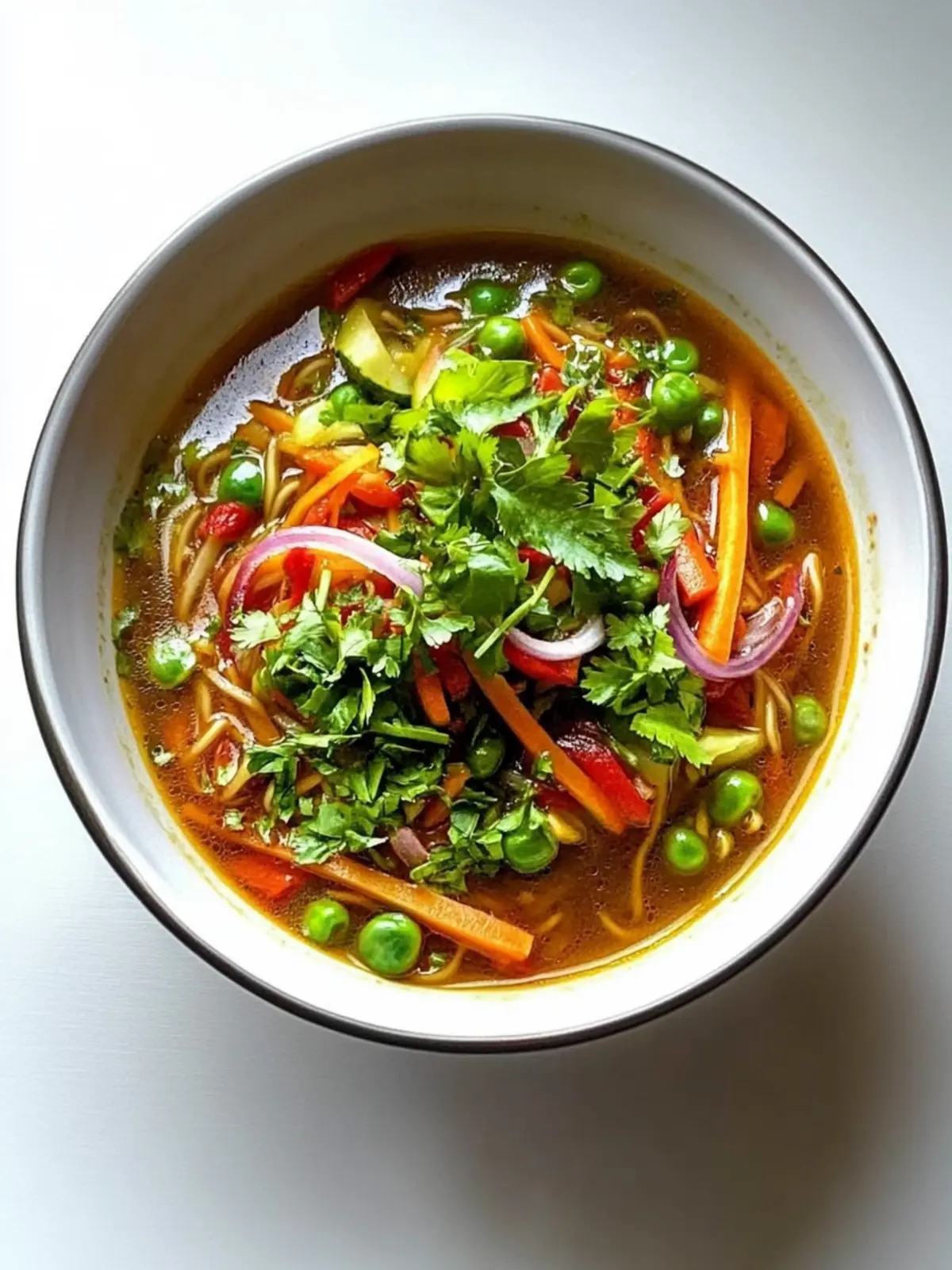
How to Store and Freeze Vegetable Thukpa
Fridge: Store leftover Vegetable Thukpa in an airtight container in the refrigerator for up to 2 days. Reheat gently over low heat, adding a splash of vegetable stock to restore its creamy consistency.
Freezer: Freeze the soup without noodles in a freezer-safe container for up to 3 months. When ready to eat, thaw in the fridge overnight and reheat on the stove. Add freshly cooked noodles just before serving.
Noodle Storage: If you have leftover cooked noodles, store them separately in an airtight container in the fridge for up to 3 days. Reheat briefly in the microwave or in hot water before adding to the soup.
Reheating: When reheating, always do so gently to prevent the noodles from becoming too soft. Stir in a little vegetable stock to keep the soup broth flavorful and rich.
Vegetable Thukpa (Tibetan Noodle Soup) Variations
Feel free to let your creativity take the lead with these variations and substitutions that can elevate your Vegetable Thukpa!
- Tofu Twist: Add cubed tofu for a protein boost. Silken or firm works well, just sauté until golden for that crispy texture.
- Seasonal Medley: Incorporate seasonal vegetables like zucchini, mushrooms, or kale. This not only adds nutrition but also a delightful variety to your soup.
- Rice Noodle Substitute: Swap egg noodles for rice noodles or gluten-free options for a deliciously different texture that remains comforting.
- Spicy Kick: For heat lovers, add sriracha or a sprinkle of red pepper flakes as a finishing touch. This will wake up your taste buds beautifully!
- Herb Infusion: Toss in fresh basil or mint leaves along with coriander for a fragrant twist. This brings a fresh zing that complements the rich broth.
- Savory Broth: Consider adding miso paste or a splash of coconut milk for depth and creaminess. This gives a unique turn to your traditional Thukpa.
- Vegan Delight: Keep it plant-based by using vegetable stock and tamari instead of soy sauce. This ensures no animal products are used while retaining the rich umami.
- Crispy Garnish: Top your soup with crispy shallots or fried garlic for that extra crunch. It’s a fun texture contrast that elevates every bite!
Expert Tips for Vegetable Thukpa
• Noodle Balance: Ensure to cook the egg noodles separately to keep them from becoming mushy when added to the Vegetable Thukpa.
• Spice Adjustments: Start with small amounts of spices like chili powder; you can always add more heat later based on your preference.
• Seasonal Veggies: Embrace seasonal produce for your soup! Using a mix of fresh vegetables not only boosts flavor but also enhances nutrition.
• Flavor Bombs: Don’t skimp on the sautéing time for the aromatics; let them cook until fragrant for a richer broth in your Vegetable Thukpa.
• Taste-Test Wisely: Always taste the broth before serving. A splash of lemon or an extra sprinkle of salt can elevate the entire dish!
What to Serve with Vegetable Thukpa (Tibetan Noodle Soup)?
A cozy night with warm, fragrant soup deserves delightful companions to create a full, satisfying meal.
- Crusty Bread: Perfect for dipping and soaking up the flavorful broth, providing a hearty contrast to the soup.
- Spring Rolls: These light, crispy appetizers offer a refreshing crunch, balancing the warmth of the Vegetable Thukpa.
- Chili Garlic Edamame: A smoky, spicy accompaniment that echoes the soup’s zestiness, making every bite an exciting flavor adventure.
- Green Salad: Fresh greens with a zesty vinaigrette brighten the meal, enhancing the wholesome, vibrant feel of the soup.
- Cucumber Raita: Creamy and cool, raita soothes the palate against the spiced broth, adding a delightful contrast to every spoonful.
- Fruit Salad: A medley of seasonal fruits creates refreshing sweetness, cleansing the palate after savoring the rich, savory soup.
- Ginger Tea: The warmth and spices of ginger tea echo the flavors of your Vegetable Thukpa, enhancing the overall comforting experience.
- Dumplings: Steamed or pan-fried dumplings add substance and flavor variety, making for a heartier meal that everyone will enjoy.
Make Ahead Options
These Vegetable Thukpa (Tibetan Noodle Soup) are perfect for busy weeknights and meal prepping! You can chop all the vegetables and store them in an airtight container in the refrigerator for up to 3 days. Additionally, you can prepare the broth (sans noodles) a day in advance and reheat it when ready to serve. Just ensure you refrigerate it promptly to maintain quality. When it’s time to enjoy your soup, simply reheat the broth, add your cooked noodles, and let it simmer briefly to bring everything together. This not only saves time but keeps your Vegetable Thukpa just as delicious, allowing you to savor every cozy bite!
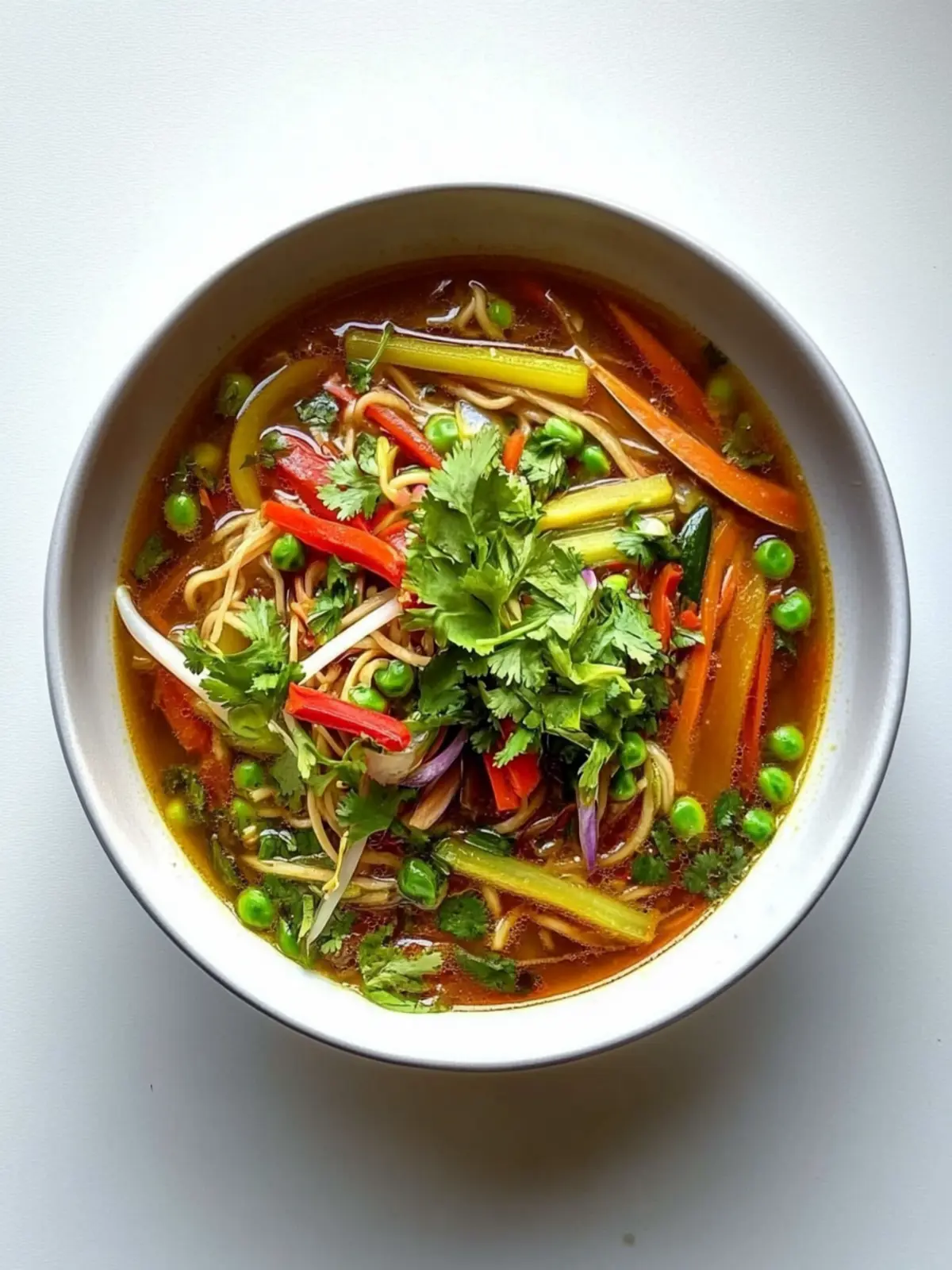
Vegetable Thukpa (Tibetan Noodle Soup) Recipe FAQs
What type of noodles should I use for Vegetable Thukpa?
You can use either fresh or dried egg noodles for your Vegetable Thukpa. Fresh noodles will cook quickly and provide a delightful texture, while dried noodles are a great pantry staple. If you prefer a gluten-free option, rice noodles are an excellent alternative. Just cook them according to package instructions and follow the same steps in the recipe!
How should I store leftover Vegetable Thukpa?
Leftover Vegetable Thukpa should be kept in an airtight container in the refrigerator and can be stored for up to 2 days. When reheating, do it gently over low heat, adding a splash of vegetable stock as needed to maintain the soup’s rich, creamy consistency. This preserves that wonderful flavor!
Can I freeze Vegetable Thukpa?
Absolutely! To freeze your Vegetable Thukpa, omit the noodles and store the soup in a freezer-safe container for up to 3 months. When you’re ready to enjoy the soup, thaw it in the fridge overnight, then reheat it on the stove. You can cook fresh noodles separately and add them just before serving to retain the best texture.
What if my soup turns out too spicy?
If your Vegetable Thukpa ends up being too spicy, don’t worry! You can balance the heat by adding a splash of coconut milk for creaminess, or try mixing in a bit of yogurt or sour cream. Adding more carrots or sweet vegetables can also help mellow the spiciness.
Are there any dietary considerations for this recipe?
Vegetable Thukpa is a great vegetarian option, but if you have any allergies, be cautious with ingredients like soy sauce since it contains gluten. For those with a nut allergy, ensure your vegetable oil and any optional garnishes are nut-free. This recipe is also pet-friendly, just remember to keep any garnishes like onions away from your furry friends, as they are harmful to dogs and cats!
How do I ensure my noodles don’t get mushy in the soup?
To keep your noodles from getting mushy, always cook them separately according to package instructions and set them aside before adding them to the soup. This way, they stay firm and perfectly cooked. When serving, place the noodles in bowls first, and then ladle the hot soup over them!
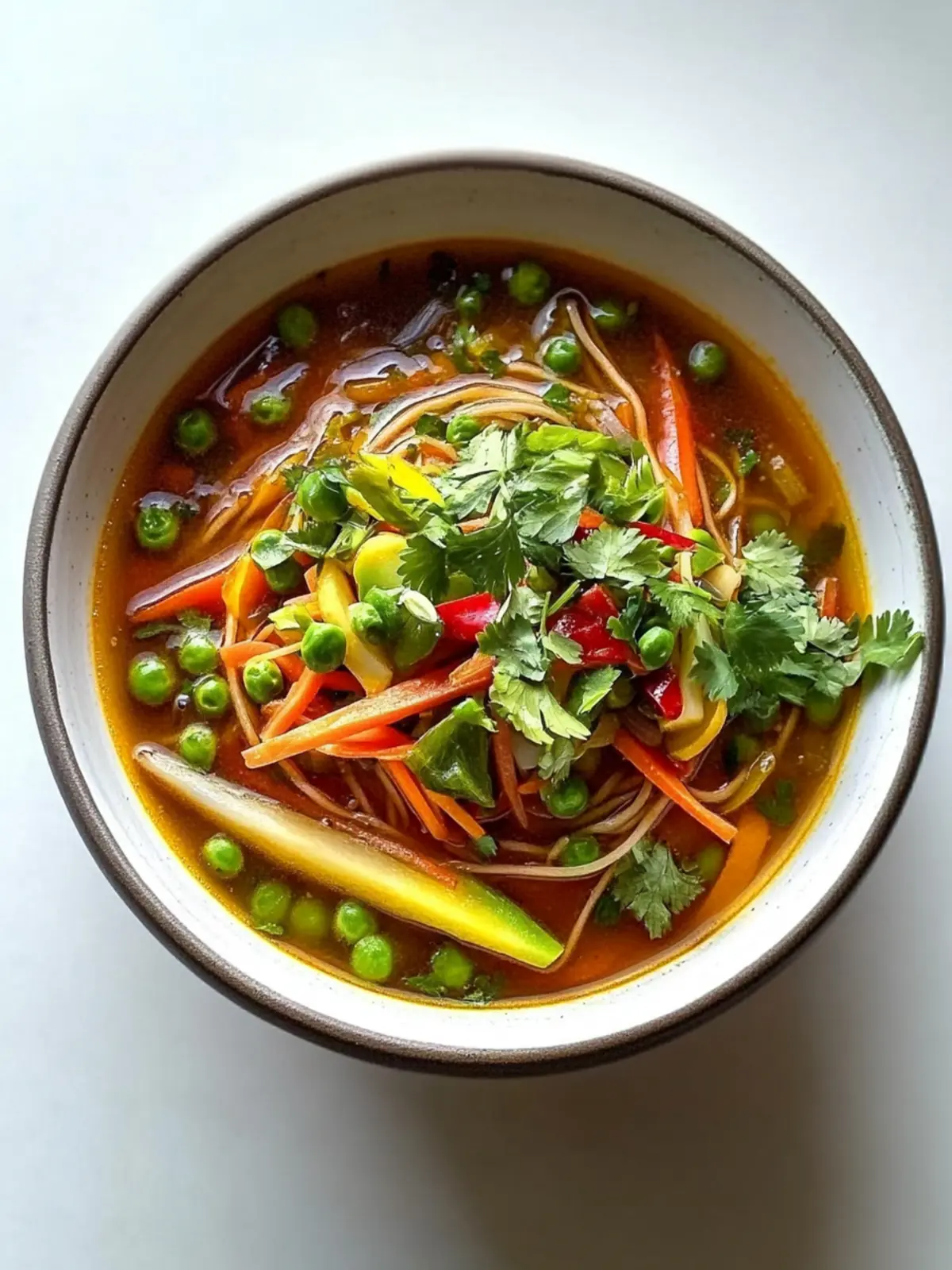
Hearty Vegetable Thukpa: Quick Tibetan Noodle Soup Delight
Ingredients
Equipment
Method
- Cook the Noodles: Begin by boiling the egg noodles according to package instructions, typically about 5-7 minutes. Drain and set aside, ensuring they don’t stick together.
- Heat the Oil: In a wok or large frying pan, heat vegetable oil over high heat until shimmering.
- Sauté the Aromatics: Add minced garlic, freshly grated ginger, green chili, diced tomato, and red onion to the hot oil. Sauté for about 2 minutes until fragrant.
- Stir in Spices: Sprinkle in the chili powder, cumin powder, turmeric powder, and garam masala. Stir well and allow spices to bloom for about 1 minute.
- Add the Broth: Pour in vegetable stock, add vegetables, soy sauce, salt, black pepper, and chopped spring onion. Bring to a gentle simmer for 5 minutes.
- Taste and Adjust: Taste the broth and adjust seasonings as needed.
- Serve the Soup: In bowls, place the cooked noodles and ladle the soup and vegetables over them. Garnish with fresh coriander and a squeeze of lemon.