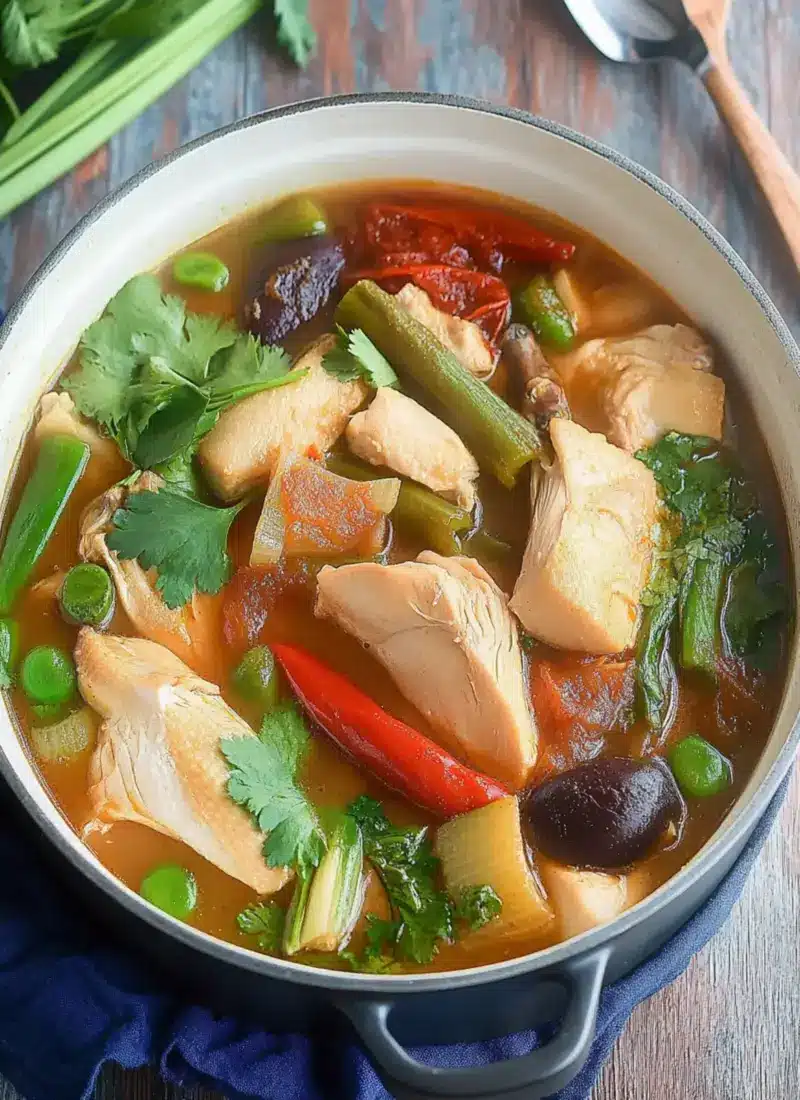
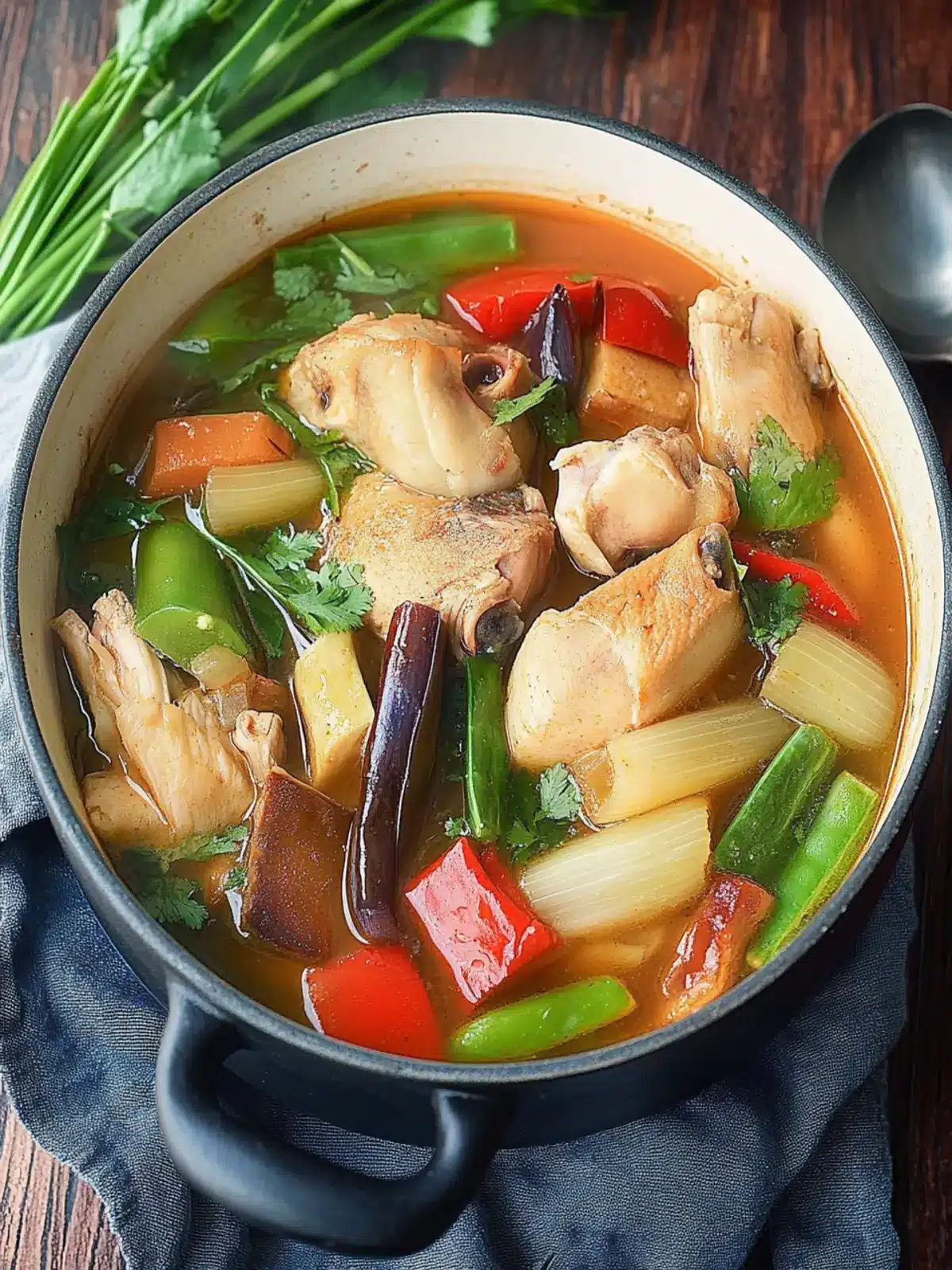
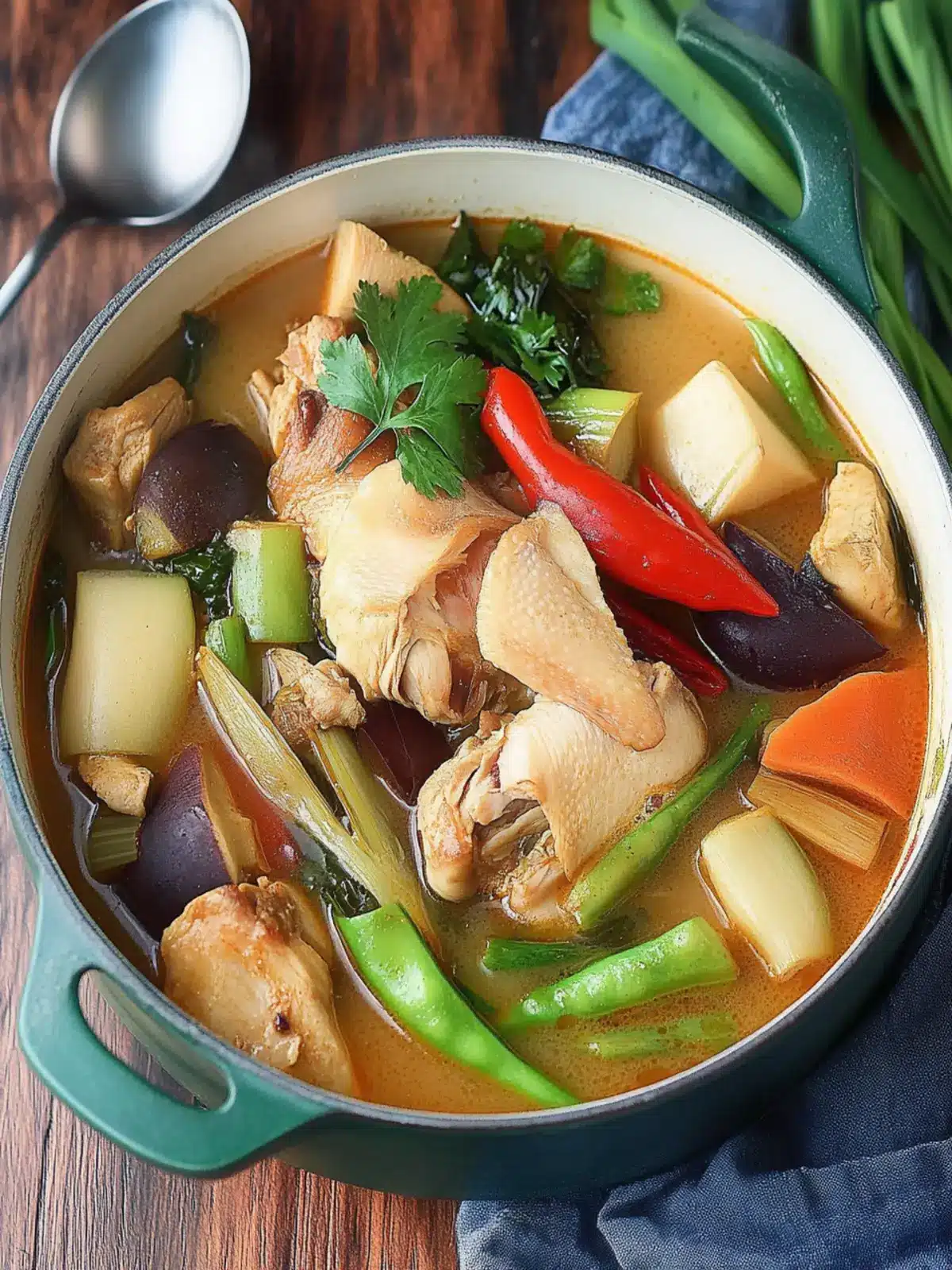
There’s nothing quite like the first comforting sip of a warm bowl of Sinigang na Manok. As the tangy broth envelops your senses, you can’t help but feel transported to a cozy kitchen filled with the aromatic blend of tamarind and fresh vegetables simmering away. This classic Filipino chicken soup has a magical way of bringing families together, whether it’s on a rainy day or during lively gatherings, showcasing the warmth and hospitality that Filipino cuisine is renowned for.
I discovered this recipe after searching for a way to escape the mundane fast food routine. The beauty of Sinigang lies in its versatility; you can adjust the sourness to your liking or swap in your favorite protein, like shrimp or pork. Packed with nourishing ingredients, it’s not just a meal; it’s a heartfelt embrace in a bowl. So, grab your apron, and let’s dive into making this delightful dish that’s sure to become a staple in your home!

Why is Sinigang na Manok so special?
Comforting warmth: This Filipino soup embodies the essence of home-cooked love, perfect for chilly evenings or family gatherings.
Flavor explosion: With a tangy broth and fresh vegetables, every bite dances on your palate with savory delight.
Culinary versatility: Feel free to experiment by swapping proteins like shrimp or pork, or adjusting the sourness to suit your taste.
Nourishing ingredients: Each bowl is a healthful option, packed with vitamins and minerals, making it a guilt-free indulgence.
Cultural richness: More than a dish, it reflects the warmth and hospitality of Filipino culture, inviting you to share in its joy with loved ones.
For a delightful twist, check out other variations like Pesang Tilapia or Sinigang na Salmon Belly that can also elevate your culinary journey!
Sinigang na Manok Ingredients
Enhance your soup with these wonderful components!
For the Soup Base
- Chicken Sections – The main protein that brings a savory and rich flavor to your Sinigang na Manok. Chicken thighs or legs can be used instead for extra juiciness.
- Large Tomato – Adds a hint of sweetness that balances the tangy broth perfectly. Substitute canned diced tomatoes if fresh ones are unavailable.
- Medium Onion – Provides depth and sweetness that enhances the overall flavor of the soup. No direct substitutes needed here.
For the Vegetables
- Daikon Radish – Contributes mild sweetness and texture; it’s a key player in the flavor profile. You can swap it with turnips or white radish if necessary.
- Small Eggplant – Brings a creamy texture when cooked to tender perfection. Zucchini or other squash varieties make great alternatives.
- Okra – Imparts a unique thickening quality and adds subtle flavor; green beans can work as an alternative if needed.
- Bok Choy (5 leaves) – Offers a delightful crunch and nutrition; Swiss chard or kale serves well as substitutes.
For the Broth
- Tamarind Soup Mix/Souring Agent – Key for the signature sourness of the dish. Feel free to use calamansi juice, guava, or tamarind paste for a tangy twist!
- Fish Sauce – Adds saltiness and umami that brings the broth to life. For a vegetarian option, soy sauce is a fantastic alternative.
Gather these ingredients and get ready to create a bowl of warmth and comfort with your homemade Sinigang na Manok!
How to Make Sinigang na Manok
- Heat Oil
Begin by adding a drizzle of oil to a pot over medium heat. Once hot, carefully place the chicken pieces and brown them on all sides for about 5–7 minutes. Remove the chicken and set it aside. - Sauté Aromatics
In the same pot, toss in the diced tomatoes and chopped onions. Sauté them for 3–5 minutes until softened, letting their sweetness fill your kitchen with delightful aromas. - Add Liquid and Mix
Pour in water and add chicken bouillon along with the tamarind soup mix. Stir it well, bringing the mixture to a gentle simmer for about 3 minutes to combine all the flavors. - Return Chicken
Place the browned chicken back into the pot. Add the daikon radish, then cover the pot and let it simmer for 10 minutes, allowing the chicken to become tender and juicy. - Incorporate Vegetables
Now, add in the small eggplant and okra. Continue simmering for another 5 minutes until the vegetables are tender. Finally, stir in the bok choy, remove from heat, and let the residual warmth wilt it gently.
Optional: Serve with a squeeze of fresh lemon or a sprinkle of chili for added zing!
Exact quantities are listed in the recipe card below.
What to Serve with Sinigang na Manok?
There’s something magical about crafting the perfect meal around a bowl of this comforting Filipino soup, adding delightful accompaniments to elevate your dining experience.
- Steamed Jasmine Rice: Serves as a perfect canvas for the tangy broth, allowing you to savor every drop while adding a satisfying starch to the meal.
- Crispy Fried Tofu: Offers a savory crunch that beautifully contrasts the soup’s textures, providing a delightful vegetarian option that absorbs the flavors wonderfully.
- Baguio Beans Salad: This fresh and vibrant salad enriches the meal with a crisp, refreshing element, balancing the warm and tangy notes of the Sinigang.
- Chili Garlic Oil: For those who crave an extra kick, drizzling this spicy oil over the soup amplifies its flavor profile with a delightful heat that pairs perfectly.
- Traditional Filipino Lumpia: These delicious spring rolls add a delightful crunch and festive feel, making your meal feel even more special and loaded with Filipino authenticity.
- Mango Salad: A sweet and tangy fruit salad perfectly complements the sour elements of the soup, adding a refreshing contrast that rounds out the meal beautifully.
By incorporating these pairings, each sip of Sinigang na Manok becomes an even more delightful experience, inviting everyone to gather and enjoy the warmth of homemade cooking.
Sinigang na Manok Variations
Customize your Sinigang na Manok to suit your cravings and taste preferences!
- Pork Alternative: Swap chicken for pork belly or ribs for a richer, savory flavor that’s equally comforting.
- Seafood Twist: Use shrimp or fish like tilapia or salmon for a lighter, seafood variation that brings the ocean’s essence to your bowl.
- Vegetarian Delight: Replace meat with tofu and mushroom for a plant-based twist that doesn’t skimp on flavor. Each spoonful will surprise you with fulfilling textures!
- Spicy Kick: Add fresh chilies or a dash of chili flakes for those who appreciate a bit of heat in their soup—perfect for warming you up on chilly nights.
- Herb Infusion: Toss in fresh herbs like cilantro or basil during the final moments of cooking for a herbaceous brightness that elevates the dish.
- Coconut Creamy: For a creamier note, incorporate coconut milk to balance the tanginess of tamarind and create an aromatic twist.
- Souring Variations: Experiment with different souring agents like calamansi juice or young mango to discover new taste profiles with every batch.
- Flavor Booster: A splash of vinegar or additional fish sauce can enhance the umami flavor, giving your broth a deeper, more savory taste.
With these simple variations, every bowl of Sinigang na Manok can reflect your personal touch! Enjoy the delicious journey of flavors!
Expert Tips for Sinigang na Manok
- Adjust Sourness: Tailor the sourness to your taste by adding more or less tamarind mix. Start with a smaller amount for a milder flavor.
- Clear Broth: Skim off any foam or impurities that rise to the surface during cooking. This keeps your Sinigang na Manok broth clear and visually appealing.
- Fresh Ingredients: Use fresh vegetables when possible, as they enhance the overall flavor. Dried or canned may lack the vivid taste of fresh produce.
- Protein Options: Feel free to experiment with different proteins like shrimp or pork for new flavor profiles. Just adjust cooking times accordingly.
- Storage Tips: Store any leftovers promptly in airtight containers in the fridge, and consume within 3–4 days to enjoy the best freshness.
Storage Tips for Sinigang na Manok
- Fridge: Store your Sinigang na Manok in airtight containers for up to 3–4 days. Make sure to let it cool down before sealing to maintain freshness.
- Freezer: For longer storage, freeze the soup in suitable containers for up to 2–3 months. Be sure to leave space at the top of the container for expansion.
- Reheating: To reheat, transfer the soup to a pot and warm it over medium heat, stirring occasionally. You can also use the microwave, heating it in short intervals, stirring in between.
- Leftovers: Always refrigerate any leftovers within 2 hours of cooking to prevent spoilage. Enjoy this comforting dish at your convenience!
Make Ahead Options
These Sinigang na Manok preparations are perfect for busy weeknights! You can chop the vegetables like daikon radish, eggplant, and okra up to 24 hours in advance, storing them in an airtight container in the refrigerator to maintain their freshness. Additionally, the chicken can be marinated with the fish sauce and spices, letting it soak up flavors up to 3 days ahead of time—just keep it covered in the fridge. When it’s time to serve, simply sauté your aromatics, add the marinated chicken and prepped veggies, then follow the cooking instructions for that comforting bowl of soup that’s just as delicious as if made fresh! This saves you time while ensuring the flavors are still vibrant.
Sinigang na Manok Recipe FAQs
How do I select the right tamarind soup mix for Sinigang na Manok?
Absolutely! When choosing a tamarind soup mix, look for one that lists tamarind as the primary ingredient with minimal additives. It should have a good balance between tanginess and sweetness. If you prefer a more natural approach, fresh tamarind can be used; soak the pulp in warm water and strain it to extract the sour juice.
What’s the best way to store leftovers of Sinigang na Manok?
Very! To keep your Sinigang na Manok fresh, let it cool before transferring to airtight containers. It can stay in the fridge for up to 3–4 days. Be sure to label the containers with a date for easy tracking. If you have a lot of leftovers, freezing is an option too.
Can I freeze Sinigang na Manok? If so, how?
Definitely! To freeze, pour the cooled soup into freezer-safe containers, leaving some space at the top to allow for expansion. It can be stored for up to 2–3 months. When ready to enjoy, thaw it in the fridge overnight and reheat gently on the stovetop or in the microwave.
What should I do if my Sinigang na Manok is too sour?
No worries! If your soup ends up too sour, you can balance it by adding a bit of sugar or honey. Start with a teaspoon, stir well, and taste test before adding more. Alternatively, adding more vegetables or a splash of water can help dilute the sourness while keeping the flavors well-rounded.
Are there any dietary restrictions I should consider when making Sinigang na Manok?
Absolutely! This dish is naturally gluten-free if you use fish sauce without gluten additives. For those with soy allergies, make sure to skip the soy sauce substitute and look for alternatives. If serving to pets, avoid any added salt or spices that could be harmful to them.
What type of chicken is best for making Sinigang na Manok?
For a truly flavorful Sinigang na Manok, I recommend using bone-in chicken pieces like thighs or legs. This not only adds richness to the broth but also keeps the meat tender during cooking. If you prefer lean meat, chicken breasts can be used, but be mindful not to overcook them to prevent drying out.
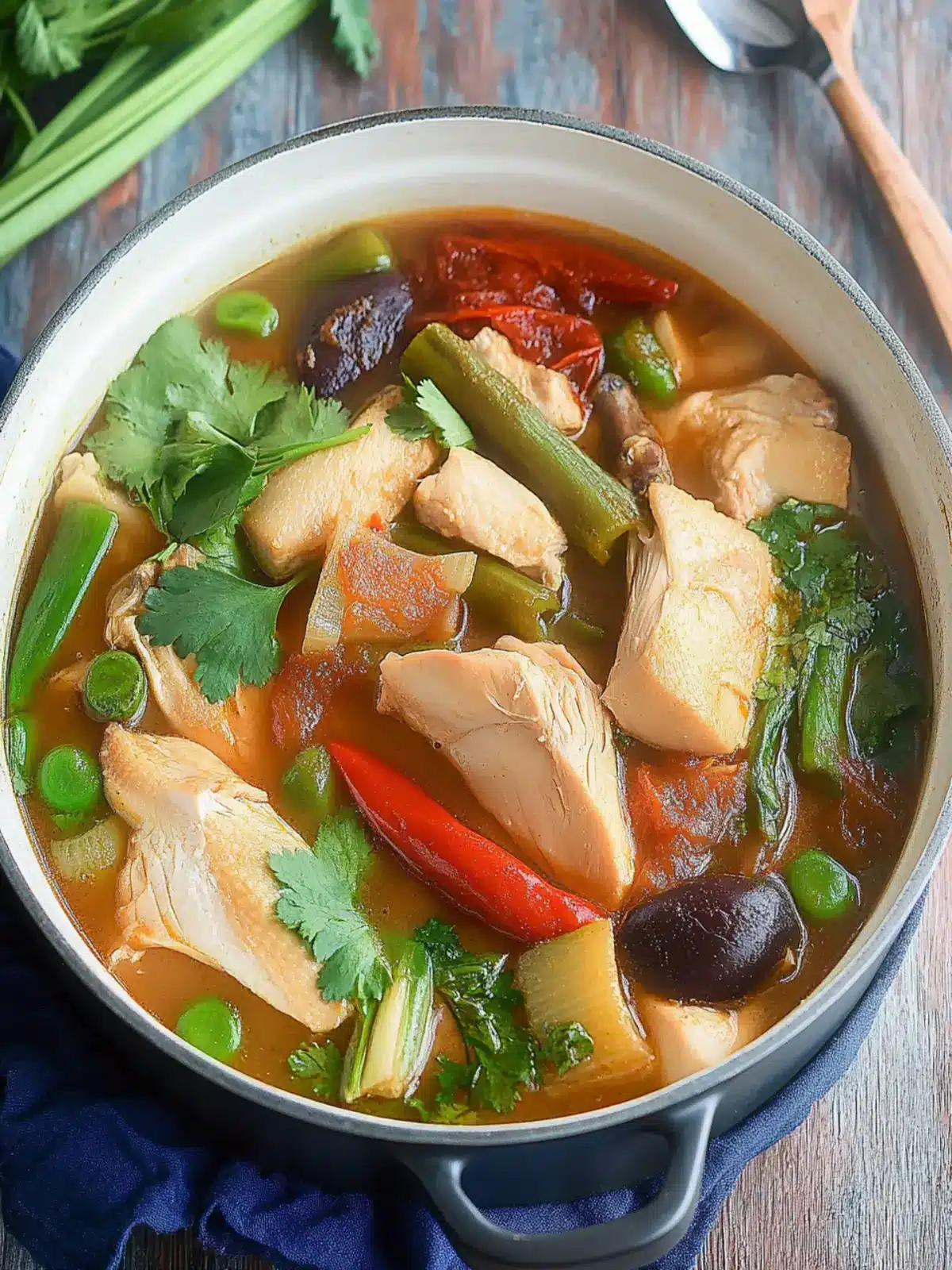
Savor the Flavor of Sinigang na Manok – Comforting Filipino Soup
Ingredients
Equipment
Method
- Begin by adding a drizzle of oil to a pot over medium heat. Once hot, carefully place the chicken pieces and brown them on all sides for about 5–7 minutes. Remove the chicken and set it aside.
- In the same pot, toss in the diced tomatoes and chopped onions. Sauté them for 3–5 minutes until softened.
- Pour in water and add chicken bouillon along with the tamarind soup mix. Stir it well, bringing the mixture to a gentle simmer for about 3 minutes to combine all the flavors.
- Place the browned chicken back into the pot. Add the daikon radish, then cover the pot and let it simmer for 10 minutes.
- Now, add in the small eggplant and okra. Continue simmering for another 5 minutes until the vegetables are tender. Finally, stir in the bok choy, remove from heat, and let the residual warmth wilt it gently.