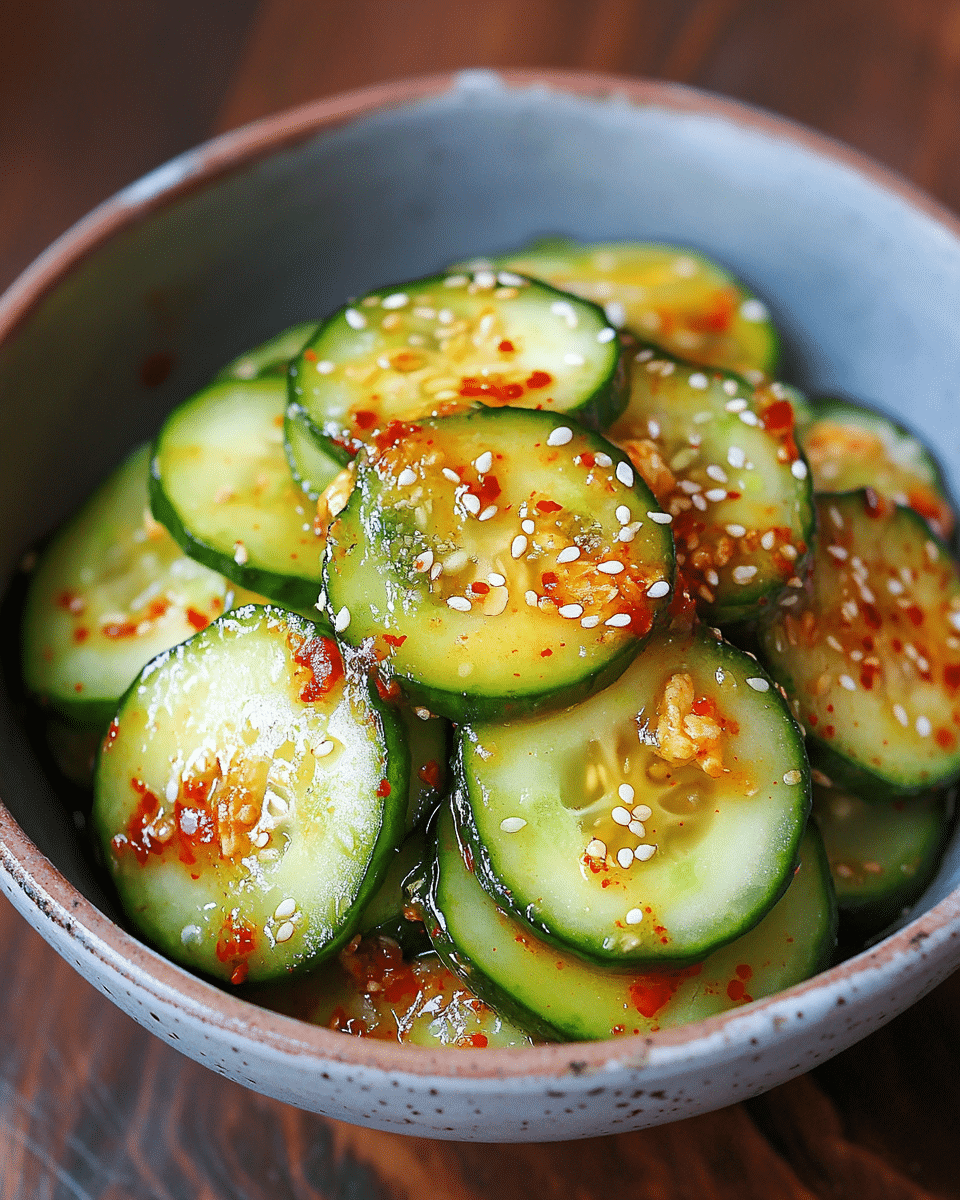
A vibrant and refreshing Korean side dish, Oi Muchim is a spicy cucumber salad bursting with flavors of garlic, chili, and sesame. It’s a quick and easy way to add a crisp, tangy, and spicy kick to any meal, perfect for pairing with Korean BBQ or rice dishes. This salad highlights the freshness of cucumbers while delivering a satisfying punch of heat and umami.
FULL RECIPE
Ingredients
- 2 large cucumbers (about 500g), thinly sliced
- 1 teaspoon salt
- 2 cloves garlic, minced
- 1 tablespoon Korean red chili flakes (gochugaru)
- 1 tablespoon soy sauce
- 1 tablespoon rice vinegar
- 1 teaspoon sugar
- 1 teaspoon sesame oil
- 1 teaspoon toasted sesame seeds
- 2 green onions, thinly sliced
Directions
- Place the cucumber slices in a bowl and sprinkle with salt. Toss well and let sit for 15 minutes to draw out excess moisture.
- After 15 minutes, drain any liquid from the cucumbers and gently squeeze to remove extra water.
- In a separate bowl, mix garlic, Korean red chili flakes, soy sauce, rice vinegar, sugar, and sesame oil until combined.
- Add the cucumbers and green onions to the spicy dressing and toss until evenly coated.
- Sprinkle toasted sesame seeds on top before serving. Serve chilled or at room temperature.
Nutritional Information
- Calories: 45 kcal
- Protein: 1 g
- Fat: 2 g
- Saturated Fat: 0.3 g
- Carbohydrates: 6 g
- Fiber: 1.5 g
- Sugar: 3 g
- Sodium: 550 mg
Cultural Significance of Oi Muchim
Korean Spicy Cucumber Salad, known as Oi Muchim, is a staple in Korean cuisine and often served as a side dish or banchan in traditional meals. This salad exemplifies Korea’s love for fresh vegetables, bold seasonings, and balance between heat and refreshment. It is commonly served during the hot summer months because of its cooling base and spicy kick, representing the harmony of yin and yang in Korean food philosophy. Its inclusion in everyday meals, family gatherings, and even festive spreads highlights its importance and popularity among Koreans.
Balance of Flavors
Oi Muchim offers a compelling contrast of flavors—spicy, sweet, salty, and tangy. This flavor balance makes it both refreshing and addictive. The crisp cucumbers carry the bold flavors of gochugaru (Korean chili flakes), garlic, vinegar, and sesame oil effortlessly. Each bite delivers a satisfying crunch paired with a pleasant heat that’s mellowed by subtle sweetness and acidity. The expertly balanced flavor profile is what makes this salad stand out as more than just a vegetable dish; it’s a sensory experience.
Nutritional Benefits
This salad is not only delicious but also packed with nutrients. Cucumbers are hydrating and low in calories, making them excellent for weight management and skin health. Garlic provides antimicrobial and immune-boosting properties, while chili flakes can help boost metabolism. The inclusion of sesame seeds and oil adds healthy fats and antioxidants. Together, these ingredients create a dish that’s as beneficial for the body as it is for the taste buds, making Oi Muchim a guilt-free culinary delight.
Texture and Mouthfeel
Texture is a vital element in Korean cuisine, and Oi Muchim delivers with its characteristic crunch. The cucumbers are typically sliced and salted to draw out moisture, enhancing their crispness. When combined with the slightly gritty texture of gochugaru and the smoothness of sesame oil, each bite offers an exciting mouthfeel. This texture contrast not only adds to the enjoyment but also enhances satiety and makes the dish more memorable.
Seasonal Adaptability
Though it’s often associated with summer, Oi Muchim can be adapted for any season. In spring, it pairs well with fresh herbs like chives or green onions. In winter, a touch of sweetness or even julienned carrots can add visual warmth and nutritional variety. This adaptability makes the dish a versatile addition to both casual weeknight meals and elaborate holiday feasts.
Role in Korean Dining Culture
Oi Muchim is most often served as part of a traditional Korean meal consisting of rice, soup, a main protein, and multiple banchan (side dishes). Its role is to cleanse the palate and add a burst of flavor in between bites of heavier dishes. Its acidic and spicy notes help balance rich flavors such as grilled meats or stews. Including Oi Muchim in a Korean-style spread adds authenticity and a refreshing complement to any protein-forward menu.
Ease and Speed of Preparation
One of the most appealing aspects of Oi Muchim is its simplicity and quick preparation time. It requires minimal cooking, making it perfect for busy individuals or those new to Korean cuisine. The quick marination process allows the cucumbers to absorb flavors almost instantly, meaning you can enjoy the dish shortly after preparing it. This makes it a convenient and satisfying option for those seeking flavorful, fast meals.
Fusion and Modern Twists
In recent years, Oi Muchim has been incorporated into fusion dishes across various cuisines. Chefs and home cooks alike are adding it to tacos, wraps, rice bowls, and even sandwiches for a spicy, refreshing crunch. Some variations include additional vegetables like radishes or fruits like pear for sweetness. These modern adaptations not only expand its appeal but also showcase its versatility beyond traditional Korean fare.
Pairings and Complementary Dishes
Oi Muchim pairs wonderfully with Korean BBQ, spicy stews, and grilled fish. It’s also great alongside rice dishes like bibimbap or even as a topping for cold noodles. Outside of Korean cuisine, it can accompany grilled meats, fried chicken, or tofu dishes. The salad’s crisp, spicy, and vinegary character enhances rich or fatty foods by providing a palate-cleansing effect, making it an ideal side for hearty meals.
Storage and Shelf Life
Though best enjoyed fresh, Oi Muchim can be stored in the refrigerator for up to 2–3 days. The flavors deepen over time, though the cucumbers may lose some of their crunch. To extend its freshness, storing it in an airtight container and avoiding excess moisture is recommended. This short shelf life encourages small batch preparation, aligning with Korean traditions of cooking with mindfulness and eating with intention.
Vegan and Allergy-Friendly
Oi Muchim is naturally vegan and can be made gluten-free, nut-free, and allergen-conscious with ease. It uses no animal products, and most of the ingredients are plant-based pantry staples. For those with soy allergies, soy sauce can be substituted with coconut aminos or tamari. This makes it an inclusive dish that can be enjoyed by people with various dietary restrictions, contributing to its growing popularity in global vegan and vegetarian communities.
Conclusion
Oi Muchim is more than just a salad—it’s a bold, vibrant expression of Korean culinary culture. With its crisp texture, fiery-sweet balance of flavors, and impressive health benefits, this dish brings refreshment and excitement to any meal. Its versatility, ease of preparation, and adaptability across cuisines make it a must-try for anyone looking to explore Korean food or elevate their vegetable side dishes. Whether served traditionally or reimagined in fusion cuisine, Korean Spicy Cucumber Salad stands out as a flavorful, healthy, and culturally rich addition to the modern table.