

There’s something truly special about the stir-fry magic of Japchae. As soon as that vibrant medley of sweet potato glass noodles hits the pan, the kitchen is filled with a welcoming aroma reminiscent of bustling Korean markets. I first discovered this dish during a potluck, where a friend introduced me to the wonder of chewy noodles intertwined with tender beef and colorful vegetables. Since then, Japchae has become my go-to meal for both cozy weeknights and festive gatherings.
What I love about this recipe is its incredible versatility. Whether you’re craving the heartiness of beef, the lightness of chicken, or the plant-based goodness of tofu, Japchae adapts beautifully to your preferences. In just 30 minutes, you can craft a dish that not only looks impressive but also delights the palate. Let’s dive into the vibrant flavors and textures that make Japchae a beloved staple in my kitchen and a perfect addition to yours!

Why is Japchae a Must-Try Dish?
Versatile and Customizable: Japchae caters to everyone, allowing you to swap proteins and add your favorite vegetables.
Quick to Prepare: In just 30 minutes, you’ll have a stunning dish ready to impress.
Nutritious and Colorful: Bursting with vitamins from a rainbow of veggies, it’s not just tasty but healthy too.
Crowd-Pleasing: Perfect for dinner parties or family meals, everyone will be asking for seconds!
Whether you’re embracing a gluten-free lifestyle or simply looking for a flavorful dinner option, don’t forget to check out more gluten-free recipes for variety in your meal plans.
Japchae Ingredients
• The heart of this flavorful dish!
For the Noodles
- Sweet Potato Glass Noodles (Dangmyeon) – These noodles provide a unique chewy texture that’s essential for authentic Japchae; no substitutes recommended.
For the Protein
- Beef – Adds richness and protein; can be swapped with chicken or tofu for lighter variations.
For the Vegetables
- Carrots – Bring natural sweetness and vibrant color; slice them thinly for even cooking.
- Spinach – Offers a nutritional boost and bright color; you can substitute with bok choy.
- Bell Peppers – Enhance the dish with crunch and color; use any variety that you enjoy.
- Mushrooms (optional) – Shiitake or button mushrooms deepen the flavor with their earthiness.
For the Seasoning
- Soy Sauce – Vital for seasoning and adding depth; opt for tamari for a gluten-free option.
- Sesame Oil – Infuses a lovely nutty aroma; vegetable oil can be a suitable substitute in a pinch.
For the Garnish
- Green Onions – Contribute freshness and crunch; chives can be used as an alternative.
- Gochujang (optional) – Introduces a spicy kick; can be omitted or substituted with chili flakes for heat.
Each ingredient in this Japchae recipe brings something special to the table, creating a delightful and customizable dish that everyone will love!
How to Make Japchae
-
Prepare Noodles: Soak sweet potato glass noodles in warm water for about 30 minutes. This step is essential to achieve that signature chewy texture for the dish.
-
Cook Noodles: Boil the soaked noodles for 4-6 minutes until they are tender but still chewy. Drain and rinse them under cold water to stop the cooking process.
-
Stir-Fry Beef: Heat a splash of oil in a skillet over medium-high heat. Stir-fry the thinly sliced beef for 3-5 minutes until it’s browned and cooked through, then set it aside.
-
Stir-Fry Vegetables: In the same skillet, add another drizzle of oil and toss in the carrots and bell peppers. Cook for 2-3 minutes, then add the spinach and stir until it wilts.
-
Combine Ingredients: Return the cooked beef to the skillet, followed by the prepared noodles. Drizzle with soy sauce and sesame oil, and mix everything thoroughly over medium heat for about 2 minutes.
-
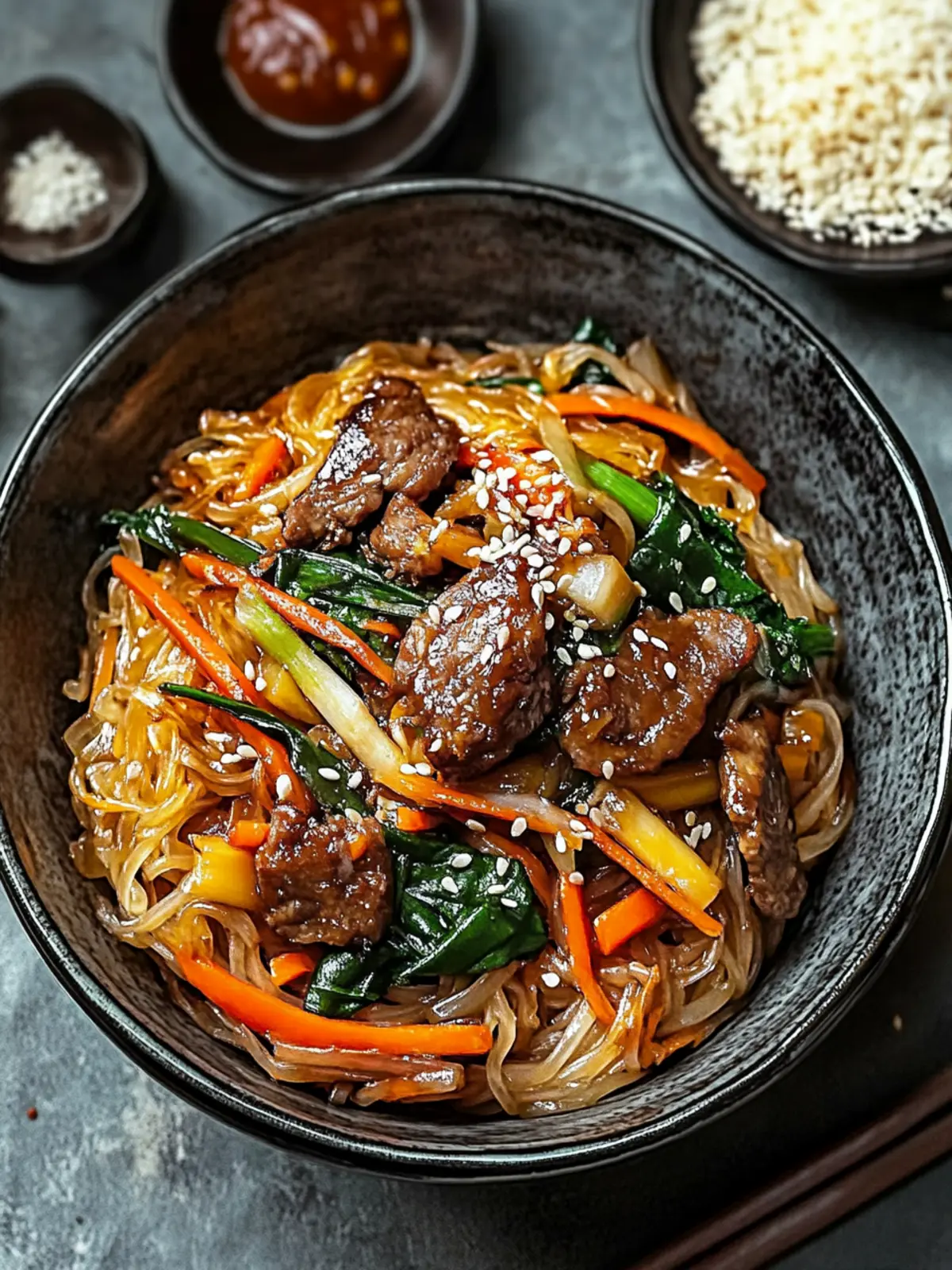
Finish and Garnish: Cook until everything is heated through, then transfer the delicious mixture to a serving dish. Sprinkle generously with chopped green onions for that fresh punch!
Optional: Serve with a side of kimchi for extra flavor.
Exact quantities are listed in the recipe card below.
Make Ahead Options
These Japchae are perfect for busy home cooks who love the convenience of meal prep! You can soak and boil the sweet potato glass noodles up to 24 hours in advance, storing them in a covered container in the refrigerator to keep them fresh. Additionally, you can prepare and stir-fry the beef and vegetables ahead of time, also refrigerating them for up to 3 days. When ready to serve, simply reheat everything in a skillet and toss in the noodles along with the soy sauce and sesame oil to finish. This way, you’ll have delicious, restaurant-quality Japchae on your table without the fuss during the week!
Expert Tips for Making Japchae
-
Noodle Texture: Avoid overcooking the sweet potato noodles; they should be chewy and not mushy for the best Japchae experience.
-
Flavor Adjustments: Experiment with the amount of soy sauce and sesame oil to customize the taste according to your family’s preferences.
-
Batch Cooking: When preparing for large gatherings, it’s beneficial to stir-fry the ingredients in batches. This prevents steaming and keeps everything crisp.
-
Fresh Garnishes: Always finish with generous green onions for a burst of freshness and an appealing presentation in your Japchae.
-
Storage Tips: If you have leftovers, store them in an airtight container and gently reheat with a splash of water to maintain moisture and texture.
What to Serve with Japchae?
Creating a delightful meal around your Japchae elevates the dining experience, making any night feel special. Imagine the vibrant colors and enticing aromas filling your kitchen as you prepare these mouthwatering sides!
- Cucumber Salad: A refreshing salad with a tangy dressing that complements the savory flavors of Japchae. The crunch of cucumbers adds a lovely contrast.
- Kimchi: This fermented dish not only offers a spicy kick but also introduces probiotics to balance the meal, making it a classic pairing.
- Miso Soup: Warm and comforting, miso soup provides a savory depth that perfectly complements the chewy noodles, making every bite more satisfying.
- Steamed Bok Choy: Lightly steamed bok choy adds a subtle earthiness and vibrant color, enhancing the meal’s overall presentation and providing extra nutrition.
- Korean Fried Chicken: Crispy, succulent fried chicken served alongside Japchae creates a festive feast for gathering with family and friends—a true crowd-pleaser!
- Fruit Platter: A colorful assortment of seasonal fruits like mango and pineapple adds a sweet touch that balances the savory elements of the dish.
- Cold Soba Noodles: Try pairing with refreshing cold soba noodles dressed in sesame sauce for an interesting twist; the nuttiness complements the flavors of Japchae nicely.
- Sparkling Water with Lime: Serve with zesty sparkling water to cleanse the palate and keep your guests refreshed as they enjoy this delectable meal.
With these enticing pairings, your Japchae dinner will be a memorable culinary celebration that warms the heart and pleases the palate.
Japchae Variations & Substitutions
Feel free to get creative with your Japchae and make it your own; the possibilities are endless!
-
Protein Swap: Substitute beef for chicken or tofu for a lighter or plant-based option that still delivers on flavor.
-
Added Crunch: Toss in snap peas or broccoli for an extra layer of texture that complements the chewy noodles beautifully.
-
Zucchini Noodles: For a lighter take, consider using spiralized zucchini in place of sweet potato glass noodles.
-
Fruity Twist: Include fresh fruit like mango or pineapple to give your dish a surprising sweet note that brightens every bite.
-
Herb Infusion: Enhance your Japchae with fresh herbs such as cilantro or basil, adding a fragrant twist that elevates the dish.
-
Heat Level: For those who enjoy a kick, add extra gochujang or a sprinkle of chili flakes to amp up the spice in your meal.
-
Nutty Flavor: Toss in toasted sesame seeds as a garnish for an added crunch and an extra layer of nuttiness.
-
Veggie Variety: Experiment with seasonal vegetables like zucchini or asparagus to keep the flavors fresh and exciting throughout the year.
Storage Tips for Japchae
Room Temperature: Consume Japchae within 2 hours of cooking if left out; it’s best enjoyed fresh, maintaining its delightful texture.
Fridge: Store leftover Japchae in an airtight container in the refrigerator for up to 3 days. Reheat gently on the stove with a splash of water to restore moisture.
Freezer: For longer storage, cool completely and transfer to a freezer-safe container. Japchae can be frozen for up to 2 months. Thaw overnight in the refrigerator before reheating.
Reheating: When reheating, add a splash of water or soy sauce to prevent the noodles from drying out, ensuring a satisfying meal experience every time.
Japchae Recipe FAQs
What type of sweet potato glass noodles should I use?
Absolutely! For authentic Japchae, use sweet potato glass noodles, also known as Dangmyeon. These provide the perfect chewy texture that is essential for this dish. Seek out packages in Asian grocery stores or the international aisle of your local supermarket.
How should I store leftover Japchae?
Very! After enjoying your meal, let the leftover Japchae cool completely, then transfer it to an airtight container. It will keep well in the fridge for up to 3 days. When ready to enjoy again, reheat on the stove with a splash of water to help restore its moisture and flavor.
Can Japchae be frozen, and how do I do it?
Definitely! To freeze Japchae, first let it cool completely after cooking. Then, place it in a freezer-safe container or resealable bag, ensuring all air is squeezed out. It can be stored in the freezer for up to 2 months. When you’re ready to eat, simply thaw it overnight in the refrigerator and reheat gently on the stove.
What if my sweet potato noodles are gummy or mushy?
No worries! To avoid gummy noodles, it’s crucial not to over-soak or overcook them. Soak the sweet potato glass noodles in warm water for just 30 minutes max, and cook them for 4-6 minutes until tender but still chewy. If they do turn mushy, you can try to salvage your dish by mixing in some fresh vegetables or additional sauce for texture.
Is Japchae safe for those with gluten allergies?
Absolutely! If you are gluten-sensitive, make sure to use tamari instead of regular soy sauce to maintain the delicious flavor while keeping it gluten-free. Always check labels of other ingredients too, as some may contain gluten.
Can I add different proteins or vegetables to my Japchae?
The more the merrier! Japchae is a wonderfully customizable dish. You can replace beef with chicken, tofu, or even shrimp, and feel free to add your favorite vegetables like snap peas or zucchini. Each variation offers a new twist, ensuring that this dish never gets boring!
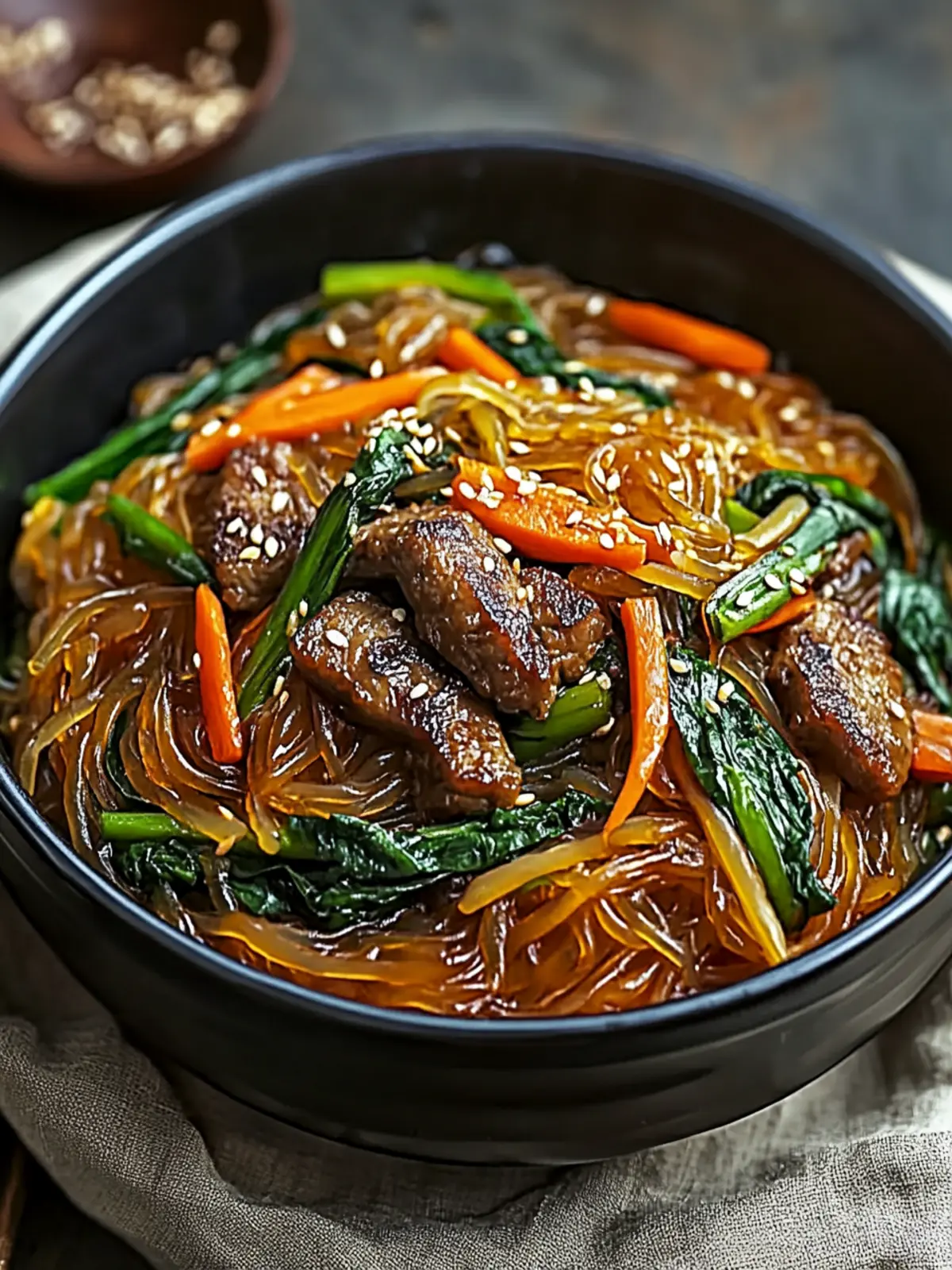
Delicious Japchae: Your Quick and Customizable Dinner Fix
Ingredients
Equipment
Method
- Soak sweet potato glass noodles in warm water for about 30 minutes.
- Boil the soaked noodles for 4-6 minutes until tender but still chewy. Drain and rinse under cold water.
- Heat oil in a skillet over medium-high heat, stir-fry the thinly sliced beef for 3-5 minutes until browned, then set aside.
- In the same skillet, add oil and toss in the carrots and bell peppers. Cook for 2-3 minutes, then add the spinach until it wilts.
- Return the cooked beef to the skillet with the noodles, drizzle with soy sauce and sesame oil, and mix on medium heat for about 2 minutes.
- Transfer the mixture to a serving dish and sprinkle with chopped green onions.