
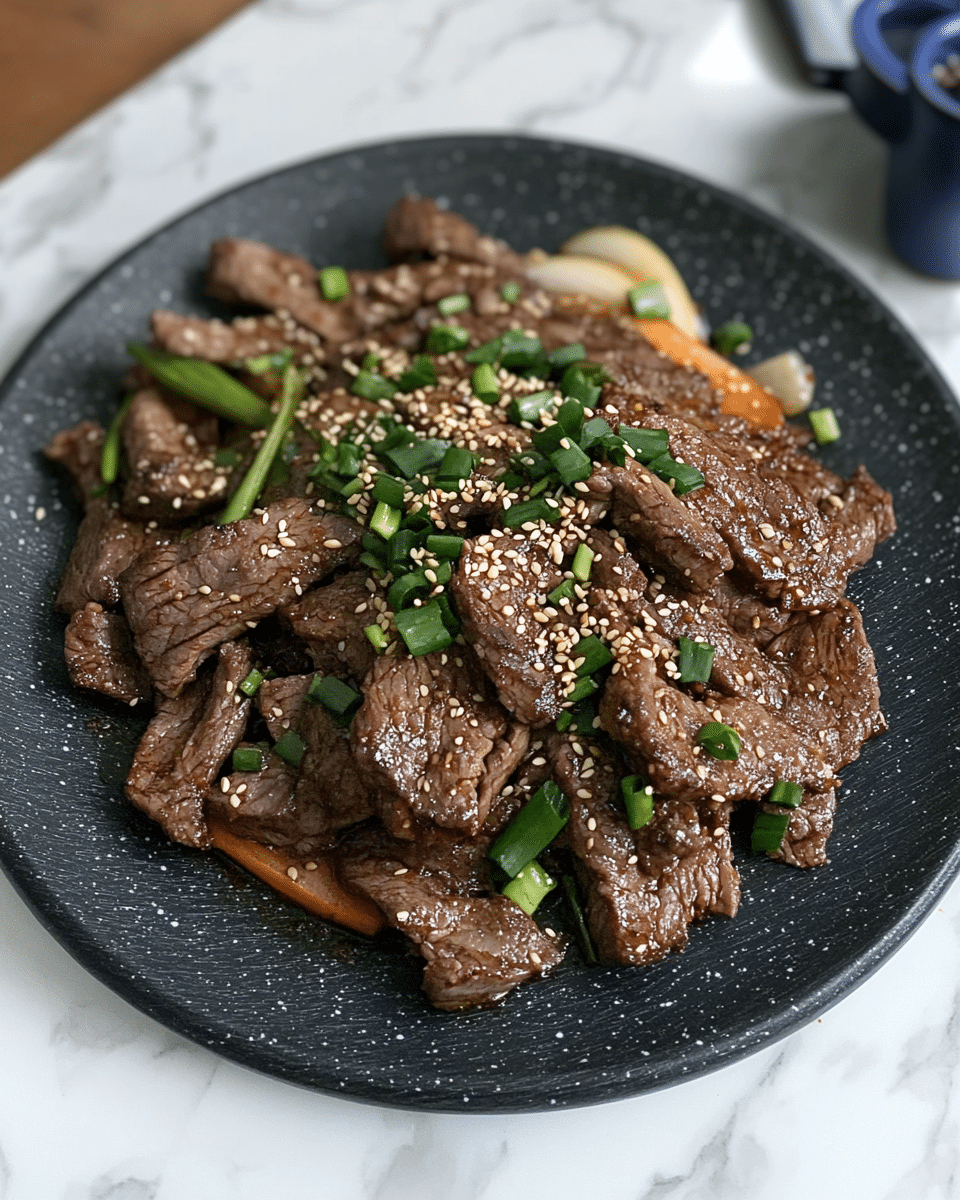
This classic Korean BBQ dish features thinly sliced beef marinated in a sweet and savory sauce, then grilled to perfection on a Blackstone griddle. It’s rich in flavor, quick to cook, and perfect for a sizzling dinner with rice or wrapped in lettuce.
FULL RECIPE
Ingredients
- 1 ½ pounds ribeye or sirloin, thinly sliced
- 1 small onion, sliced thin
- 2 green onions, chopped
- 1 small carrot, julienned (optional)
- 1 tablespoon sesame oil
- 1 tablespoon vegetable oil (for grilling)
- 1 tablespoon toasted sesame seeds (for garnish)
1.For the Marinade:
- ¼ cup soy sauce
- 2 tablespoons brown sugar
- 1 tablespoon honey
- 1 tablespoon rice vinegar
- 1 tablespoon grated garlic (about 3 cloves)
- 1 tablespoon grated ginger
- 1 Asian pear or apple, grated
- 2 tablespoons mirin or cooking wine
- 1 teaspoon freshly ground black pepper
Directions
- In a large bowl, mix all marinade ingredients until the sugar dissolves.
- Add the sliced beef, onion, carrot (if using), and green onions to the marinade. Mix well to coat.
- Cover and refrigerate for at least 2 hours, preferably overnight, to allow the flavors to infuse.
- Preheat the Blackstone griddle to medium-high heat. Add vegetable oil.
- Grill the marinated beef in batches, spreading it thinly across the hot surface. Cook for 2–3 minutes per side until caramelized and cooked through.
- Drizzle with sesame oil and sprinkle with toasted sesame seeds before serving.
- Serve hot with steamed rice, lettuce wraps, or kimchi.
Nutritional Information
- Calories: 385
- Protein: 28g
- Carbohydrates: 19g
- Dietary Fiber: 1g
- Sugars: 12g
- Fat: 22g
- Saturated Fat: 6g
- Cholesterol: 70mg
- Sodium: 850mg
- Iron: 3mg
- Calcium: 45mg
- Potassium: 430mg
History and Origin of Bulgogi
Bulgogi, which means “fire meat” in Korean, is one of Korea’s most iconic and beloved dishes. Its origins date back to the Goguryeo era (37 BC – 668 AD), where grilled meat was a common cooking method. Over centuries, bulgogi evolved into the marinated, thinly sliced beef dish known today, reflecting Korea’s rich culinary heritage. Traditionally prepared for special occasions, bulgogi has grown to become an everyday comfort food that bridges generations and cultures.
Cultural Significance of Bulgogi in Korea
In Korean culture, bulgogi symbolizes hospitality and celebration. It’s often enjoyed during family gatherings, holidays, and communal meals, where the act of grilling and sharing food brings people closer. Bulgogi is more than just a meal; it is a social experience, emphasizing communal eating and interaction. The dish also represents Korea’s deep respect for balanced flavors and fresh ingredients, combining sweetness, saltiness, and umami.
Why Use Ribeye or Sirloin for Bulgogi?
Choosing the right cut of beef is crucial to authentic bulgogi. Ribeye and sirloin are preferred because they are tender and have just enough marbling to keep the meat juicy and flavorful during grilling. These cuts absorb the marinade deeply, which enhances the texture and taste. Using tougher cuts would require longer marinating times or different cooking methods, altering the delicate balance of flavors characteristic of bulgogi.
The Role of Marinade in Bulgogi
The marinade is the heart of bulgogi, balancing sweet, savory, and aromatic notes to tenderize and flavor the beef. Ingredients like soy sauce, sugar, garlic, and Asian pear not only add taste but also break down the meat’s proteins, making it tender and juicy. The use of Asian pear or apple is traditional and imparts natural sweetness and enzymes that soften the beef. This combination creates the dish’s signature flavor profile and texture.
Using a Blackstone Griddle for Cooking Bulgogi
Cooking bulgogi on a Blackstone griddle is a modern twist that mimics traditional Korean grilling over charcoal. The griddle’s high heat and large surface allow for even cooking and caramelization, giving the beef a perfect charred exterior while keeping it tender inside. This method is convenient for home cooks without access to outdoor grills and helps retain juices by cooking the meat quickly and evenly.
Variations of Bulgogi Across Korea and Beyond
While beef bulgogi is the most popular version, variations exist throughout Korea and internationally. Some regions use pork (dwaeji bulgogi) or chicken, adjusting the marinade for the different meats. Internationally, bulgogi has inspired fusion dishes like bulgogi tacos or burgers. These variations show bulgogi’s versatility and global appeal, allowing people to enjoy the flavors in new and exciting ways while staying true to the original spirit.
Pairing Bulgogi with Traditional Korean Side Dishes
Bulgogi is typically served with an array of side dishes (banchan), such as kimchi, pickled vegetables, steamed rice, and fresh lettuce for wraps. These sides complement the rich and sweet flavors of the meat by adding acidity, crunch, and freshness. Lettuce wraps (ssam) are especially popular, where bulgogi is wrapped with rice, garlic, and ssamjang (a spicy paste), creating a balanced bite full of texture and flavor.
Health Considerations When Enjoying Bulgogi
While bulgogi is flavorful and satisfying, it’s important to enjoy it in moderation due to its sugar and sodium content from the marinade. Using lean cuts and controlling portion sizes can help maintain a balanced diet. Additionally, bulgogi’s protein-rich profile supports muscle health, while accompanying vegetables add fiber and essential nutrients. Making homemade marinades allows for customization, such as reducing sugar or salt, making it a healthier option than many restaurant versions.
The Importance of Fresh Ingredients in Bulgogi
Freshness is key to authentic bulgogi. Fresh garlic, ginger, and vegetables enhance the marinade’s aroma and depth. Using fresh beef ensures tenderness and flavor, while fresh produce brings color and nutrition to the dish. The quality of ingredients directly impacts the final taste, making bulgogi a dish that celebrates natural, simple, yet powerful flavors.
How Bulgogi Reflects Korean Flavor Balance
Korean cuisine is known for its harmony of flavors — sweet, salty, sour, bitter, and spicy. Bulgogi exemplifies this balance with its sweet marinade countered by the umami of soy sauce and a subtle peppery heat. This harmony makes bulgogi approachable and enjoyable for diverse palates. The dish’s balance also reflects Korean culinary philosophy, which aims for well-rounded meals that satisfy multiple senses and promote well-being.
Bulgogi’s Popularity and Adaptation Worldwide
Thanks to Korean pop culture and growing global interest in Korean food, bulgogi has gained international popularity. Restaurants and home cooks worldwide embrace the dish, often adapting it with local ingredients and cooking styles. Its ability to blend with different cuisines, from American BBQ to Mexican street food, has made bulgogi a global culinary ambassador, introducing many to the rich flavors of Korean cooking.
Tips for Making Perfect Bulgogi at Home
Achieving authentic bulgogi at home requires attention to slicing the beef thinly, marinating long enough, and grilling over high heat. Using a sharp knife or asking the butcher for thin slices helps with texture. Avoid overcrowding the pan or griddle to ensure proper caramelization. Resting the meat briefly after cooking lets juices redistribute. These tips help home cooks capture the essence of traditional bulgogi easily and deliciously.
Conclusion
Black Stone Korean BBQ Beef Bulgogi is more than just a tasty grilled meat dish — it’s a rich cultural experience rooted in Korean history and culinary tradition. Its balance of flavors, tender texture, and social eating style have helped it transcend borders and become a global favorite. Whether cooked on a griddle or over charcoal, enjoyed with traditional sides or modern twists, bulgogi remains a vibrant expression of Korea’s food heritage and its ongoing influence on the world’s palate.