
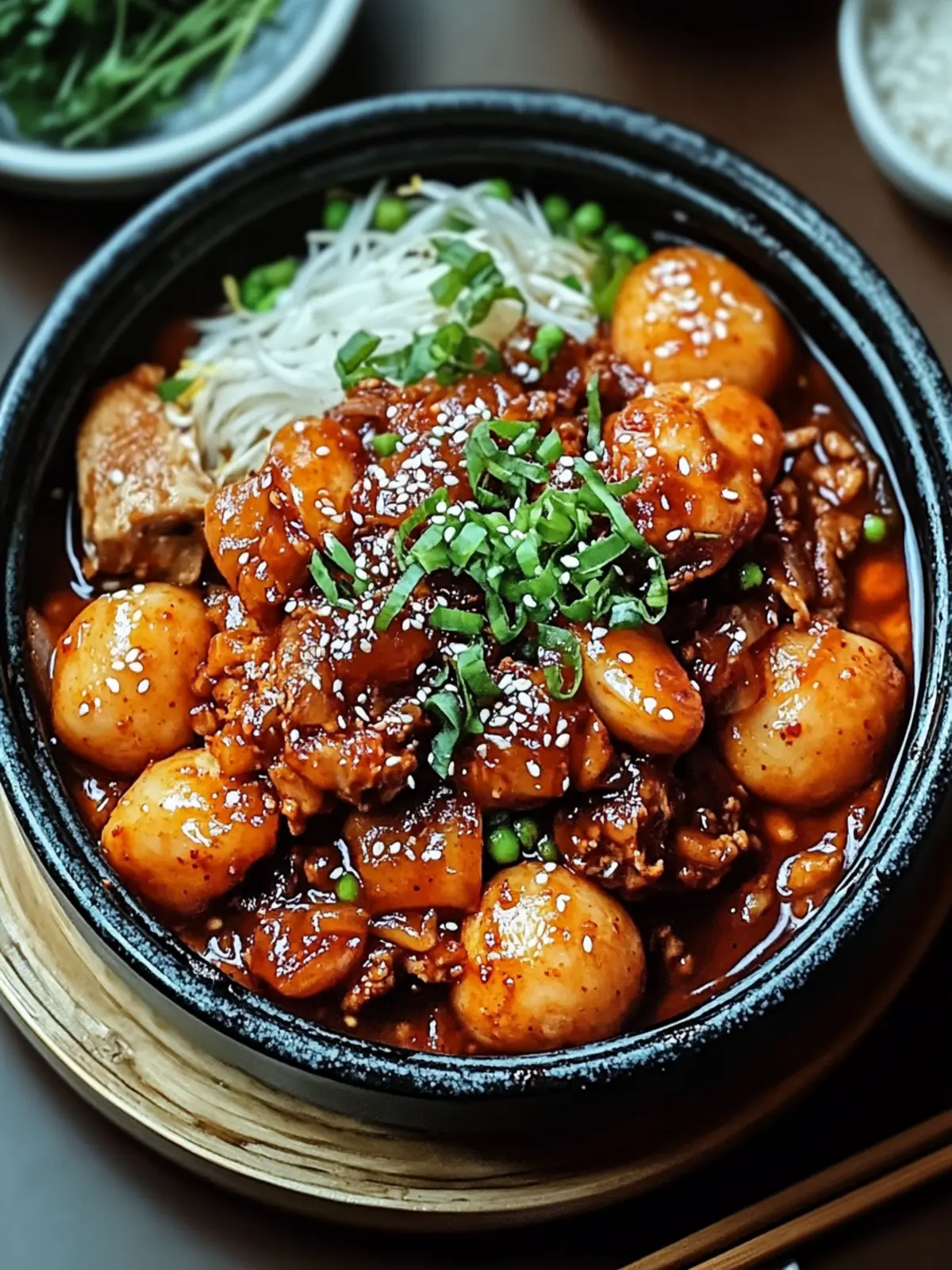
When the chilly winds of autumn start to whisper through my window, there’s only one dish that can warm my heart and fill my home with comforting scents: Jjimdak, the beloved Korean braised chicken. As the aroma of tender chicken simmering in a sweet soy sauce dances through the air, I can’t help but reminisce about family gatherings where this one-pot wonder stole the show. Its rich flavors and cozy textures transform simple ingredients into a memorable feast that appeals to everyone, from picky eaters to gourmet aficionados.
What I love most about Jjimdak is its incredible versatility. Whether you prefer traditional bone-in chicken or wish to swap in tofu or beef, this dish easily adapts to suit various dietary preferences, including gluten-free options. Plus, it simplifies my weeknight cooking with minimal cleanup, leaving more time to enjoy the company at the table. Join me as we dive into making this heartwarming Korean classic, perfect for cozy nights or family celebrations alike!
Why is Jjimdak a Must-Try Recipe?
Comforting Aroma: The moment you start cooking Jjimdak, your kitchen fills with a delightful blend of savory and sweet scents that beckon everyone to the table.
One-Pot Wonder: Enjoy minimal cleanup with this easy, stress-free recipe that transforms simple ingredients into a festive meal for family or friends.
Customizable Flavors: From chicken to tofu, you can easily tailor this dish to fit different dietary needs. Plus, it welcomes seasonal veggies for an added color burst!
Perfectly Balanced Texture: With tender chicken, hearty potatoes, and chewy noodles, every spoonful brings a satisfying mix of textures that’s sure to please.
Meal Prep Friendly: Save time on busy weeknights by prepping ingredients in advance; Jjimdak can easily be made ahead!
Jjimdak Korean Braised Chicken Ingredients
For the Chicken
• Bone-in Chicken Thighs and Drumsticks – Provides rich flavor and tenderness during braising. Substitution: Use skinless chicken for a leaner option.
For the Vegetables
• Medium Potatoes – Adds heartiness and absorbs sauce flavors. Substitution: Firm potatoes with smooth skins are best; sweet potatoes can enhance sweetness.
• Large Carrot – Provides sweetness and texture. Substitution: Sweet potato can be used for extra sweetness.
• Large Onion – Contributes sweetness and umami. Note: Yellow or white onion is preferred.
• Green Onions (2) – Adds freshness as a garnish. Tip: Use both green and white parts for visual appeal.
For the Aromatics
• Garlic (5 cloves) – Acts as an aromatic base flavor. Tip: Fresh garlic is ideal for flavor.
• Fresh Ginger (1 tablespoon) – Adds warmth and spice. Note: Ground ginger can be substituted if fresh is not available.
For the Braising Liquid
• Soy Sauce (1/2 cup) – Primary savory component in the braising liquid. Substitution: Tamari can be used for a gluten-free version.
• Brown Sugar (2 tablespoons) – Balances the soy sauce’s saltiness. Note: Honey can provide a different sweetness.
• Mirin or Rice Wine (1 tablespoon) – Enhances overall flavor. Substitution: Dry sherry may also work.
• Water or Chicken Broth (2 cups) – Base liquid that includes broth for more flavor depth.
For Additional Flavor
• Gochugaru (1 tablespoon) – Provides a kick of heat. Adjust amount based on spice preference.
• Sesame Oil (1 tablespoon) – Adds nuttiness to the dish. Toasted sesame oil is preferred for depth.
For the Noodles and Garnish
• Korean Glass Noodles (120g) – Absorbs sauce with a chewy texture. Soak before adding to the pot.
• Korean Rice Cakes (150g) – Offers delightful chewiness; ensure they are soaked prior to cooking.
• Sesame Seeds (1 tablespoon) – Optional garnish for a nutty crunch. Tip: Toast before garnishing for flavor enhancement.
This ingredient list for Jjimdak sets you up for a delightful cooking experience while the rich flavors come together, creating a dish that truly embodies comfort.
How to Make Jjimdak
-
Prep Ingredients: Start by washing and peeling the potatoes, cutting them into cubes. Slice the carrot into rounds and chop the onion. Mince the garlic and ginger, and soak the glass noodles or rice cakes in water.
-
Sear Chicken: In a heavy-bottomed pot, heat some oil over medium-high heat. Carefully sear the chicken pieces for about 5-7 minutes until they turn golden brown, creating a flavorful crust.
-
Cook Aromatics: Reduce the heat to medium and add the chopped onion, minced garlic, and ginger to the pot. Stir everything together for 2-3 minutes until fragrant and the onion becomes translucent.
-
Combine Liquids: Pour in the soy sauce, brown sugar, mirin, gochugaru, and water or chicken broth. Stir well until the sugar is fully dissolved, setting the base for that rich sauce.
-
Add Vegetables: Gently fold the cubed potatoes and sliced carrots into the pot. Bring the mixture to a gentle boil, then cover and simmer for 25-30 minutes, allowing the chicken to become tender and absorb all the flavors.
-
Add Noodles/Cakes: Ten minutes before finishing, stir in the soaked glass noodles or rice cakes. This will give them time to soak up the delicious sauce.
-
Finish Dish: Once everything is cooked through, remove the pot from heat and drizzle the sesame oil over the dish. Taste and adjust the seasoning as needed, then garnish with chopped green onions and toasted sesame seeds before serving.
Optional: Sprinkle with fresh cilantro for an extra burst of flavor.
Exact quantities are listed in the recipe card below.
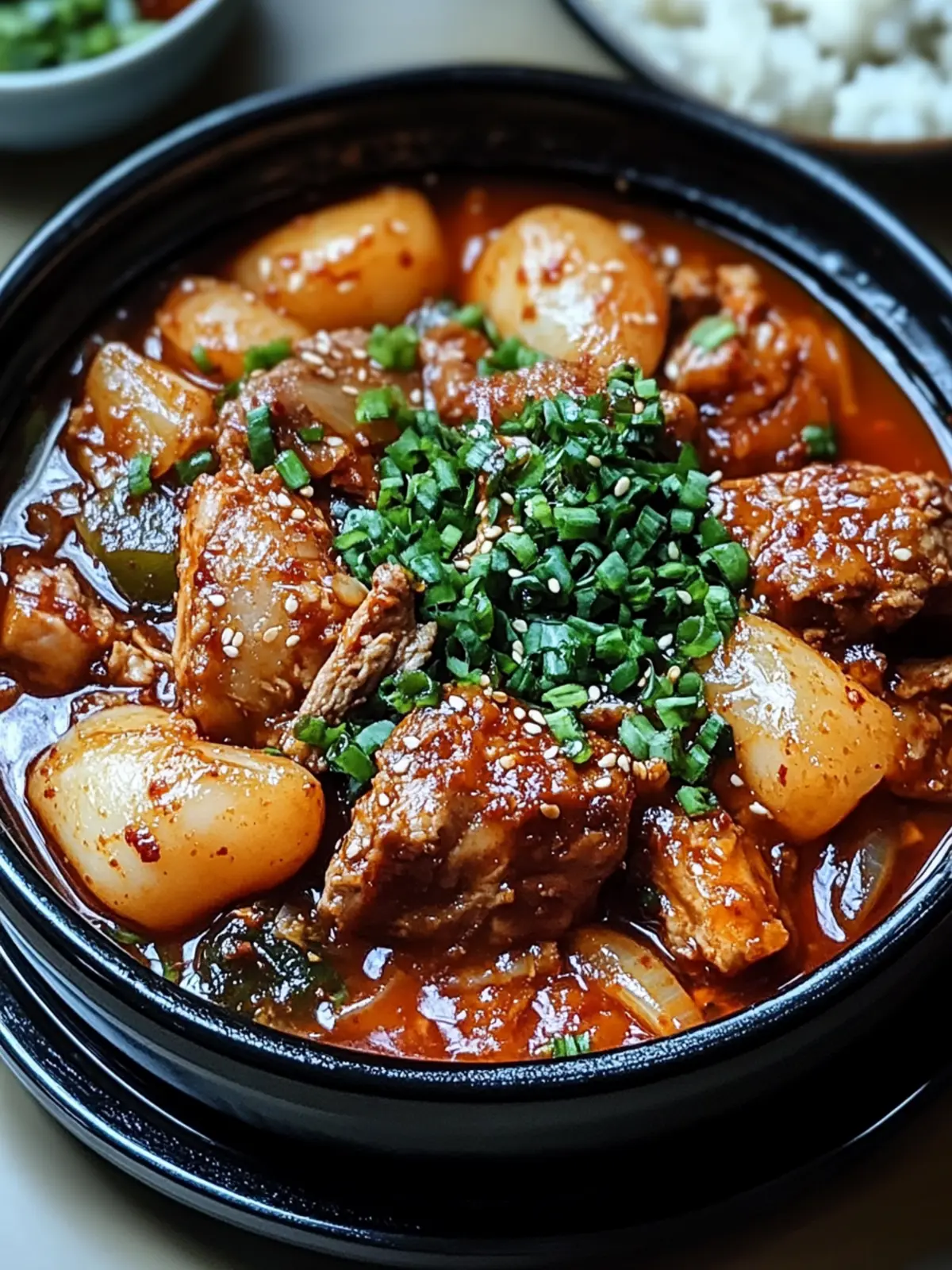
How to Store and Freeze Jjimdak
-
Fridge: Store leftover Jjimdak in an airtight container for up to 3 days. Make sure it cools completely before sealing to maintain freshness.
-
Freezer: For longer storage, freeze Jjimdak in a tightly sealed container for up to 3 months. Portion it out for easy reheating later.
-
Reheating: Gently reheat Jjimdak on the stovetop over low heat, adding a splash of water or broth to prevent drying out. Stir occasionally until heated through.
-
Serving Tip: If you’ve frozen Jjimdak, allow it to thaw overnight in the fridge before reheating for the best texture and flavor retention.
What to Serve with Jjimdak?
When savoring a warm pot of Jjimdak, you want to create a complete meal that tantalizes the senses and complements its rich flavors.
- Steamed White Rice: A classic pairing, it soaks up the delectable sauce and balances the dish’s savory notes.
- Korean Cucumber Salad: This refreshing side adds a crunch and a zesty contrast, perfect for cutting through the richness of the braised chicken.
- Kimchi: The fiery and tangy taste of kimchi not only adds a probiotic boost but also enhances the overall flavor experience of your meal.
- Korean Pickled Radish: Known for its crisp and mildly sweet profile, this side brings brightness to your plate, enhancing the dish’s complexity.
- Sesame Spinach Salad: The nutty flavors and bright color of sesame-dressed spinach provide a nutritious and fresh element alongside the warm Jjimdak.
- Chilled Soju: A traditional Korean drink, its smoothness and slight sweetness perfectly complement the savory notes of the chicken, making every bite even more delightful.
These sides and beverages will enhance your dining experience, bringing your meal together in a delightful symphony of flavors!
Jjimdak Variations & Substitutions
Feel free to let your creativity shine by customizing this dish to suit your tastes and dietary needs—all while savoring its comforting flavors!
- Dairy-Free: Replace any dairy ingredients with plant-based alternatives, like using coconut milk for a creamier sauce.
- Protein Swaps: Use beef, pork, or tofu instead of chicken for a delightful twist that caters to varied tastes.
- Seasonal Veggies: Add bell peppers, zucchini, or broccoli to boost nutrition and add a pop of color, making each bite vibrant.
- Spice It Up: Adjust the heat by increasing the gochugaru or adding fresh chili peppers for a fiery kick that warms the soul.
- Gluten-Free: Swap soy sauce for tamari or coconut aminos to create a gluten-free version that still has that rich flavor.
- Different Noodles: Experiment with udon or rice vermicelli for a change in texture that keeps the dish exciting and fresh.
- Herb Infusion: Stir in fresh herbs like cilantro or basil at the end of cooking for an aromatic lift that brightens the flavors.
- Sweet Element: Consider adding a splash of orange juice or a bit of fruit chutney for a fruity sweetness that elevates the dish.
Make Ahead Options
Jjimdak is a fantastic choice for busy home cooks who want to streamline meal prep! You can chop the vegetables and marinate the chicken up to 3 days ahead of cooking. Simply refrigerate all components in separate airtight containers until you’re ready to create your dish. To maintain quality, be sure to keep the chicken and vegetables chilled, which helps preserve their flavors and textures. When it’s time to enjoy your cozy meal, follow the cooking instructions from where you left off: sear the chicken, add in your prepped vegetables, and simmer away. In no time, you’ll have a comforting pot of Jjimdak ready to serve!
Expert Tips for Jjimdak
-
Prep Ahead: Make your life easier by chopping vegetables and marinating chicken up to three days in advance, storing them in the fridge until cooking.
-
Searing Matters: Don’t rush the searing process; a deep golden-brown crust enhances the flavor of Jjimdak by adding a richer taste to your dish.
-
Adjust Saltiness: If you find your sauce too salty, a touch more brown sugar or a splash of water can balance it out without losing that savory depth.
-
Texture Control: Reheat leftovers gently to preserve texture, and consider cooking rice cakes separately to avoid them becoming too soft when reheated.
-
Customize Your Dish: Feel free to substitute chicken with beef or tofu, and add seasonal vegetables to suit your family’s preferences while keeping true to the essence of Jjimdak.
-
Spice Smartly: Adjust the amount of gochugaru to cater to your spice tolerance—it’s all about finding that perfect level of heat that works for you!
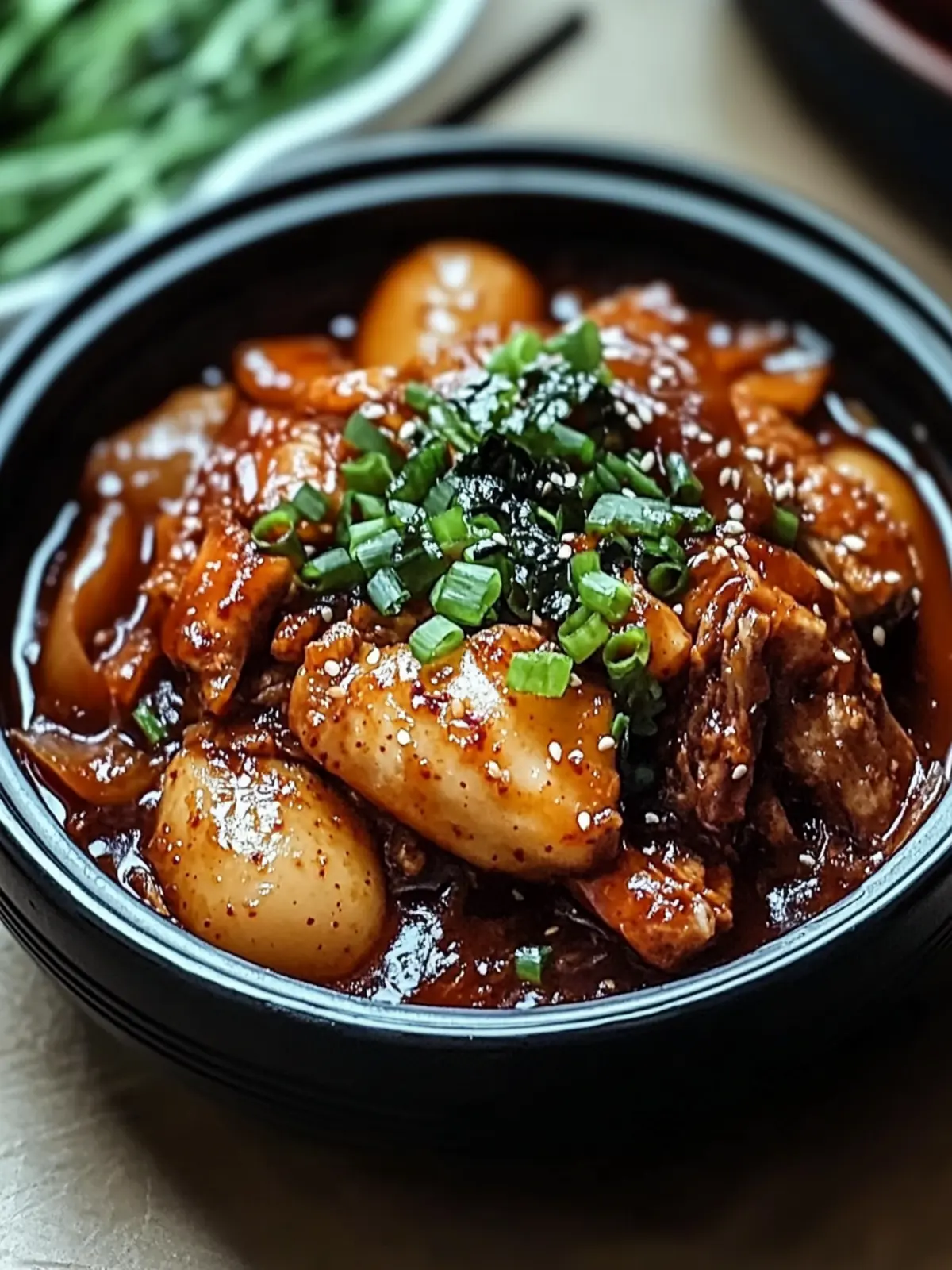
Jjimdak (Korean Braised Chicken) Recipe FAQs
What type of chicken is best for Jjimdak?
I recommend using bone-in chicken thighs and drumsticks for the richest flavor and tenderness during braising. If you’re looking for a leaner option, skinless chicken is a great substitute that still delivers taste without excess fat.
How can I store leftover Jjimdak?
Store your leftover Jjimdak in an airtight container in the fridge for up to 3 days. It’s best to allow it to cool completely before sealing to maintain its delicious freshness. When ready to enjoy, just reheat gently!
Can I freeze Jjimdak for later?
Absolutely! To freeze Jjimdak, place it in tightly sealed containers for up to 3 months. If you want to make reheating easy, consider portioning it out into single servings. Just remember, when it’s time to eat, thaw it overnight in the fridge for optimal texture.
What if my sauce is too salty?
If you find your sauce has turned out saltier than anticipated, try adding a bit more brown sugar or a splash of water to balance the flavors. Make sure to stir well and let it simmer for a few minutes, tasting as you go to avoid overshooting your adjustments.
Are there any dietary considerations with Jjimdak?
Yes! Jjimdak can easily accommodate gluten-free diets by substituting soy sauce with tamari. For those with meat allergies, you can swap out the chicken entirely with tofu or beef for a delicious alternative. Always double-check ingredient labels if you’re concerned about allergies!
What are the signs of ripe vegetables for Jjimdak?
When selecting potatoes, look for firm ones without dark spots or sprouting. Carrots and onions should be bright and crisp, avoiding any that feel soft or have blemishes. Fresh garlic and ginger should be firm with no signs of mold. Using fresh vegetables ensures your dish has the best flavor!
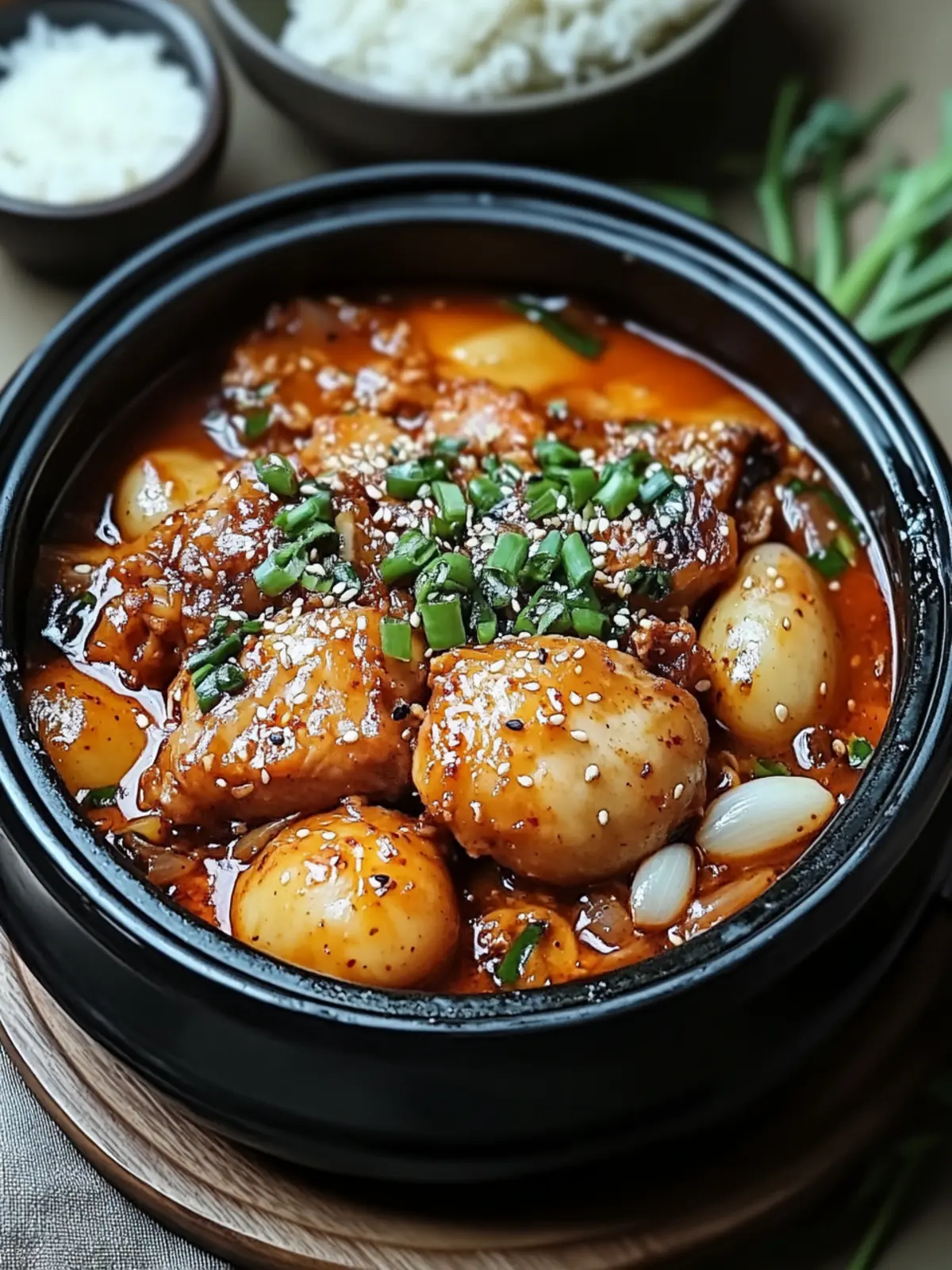
Cozy Up with Jjimdak Korean Braised Chicken Delight
Ingredients
Equipment
Method
- Prep Ingredients: Start by washing and peeling the potatoes, cutting them into cubes. Slice the carrot into rounds and chop the onion. Mince the garlic and ginger, and soak the glass noodles or rice cakes in water.
- Sear Chicken: In a heavy-bottomed pot, heat some oil over medium-high heat. Carefully sear the chicken pieces for about 5-7 minutes until they turn golden brown, creating a flavorful crust.
- Cook Aromatics: Reduce the heat to medium and add the chopped onion, minced garlic, and ginger to the pot. Stir everything together for 2-3 minutes until fragrant and the onion becomes translucent.
- Combine Liquids: Pour in the soy sauce, brown sugar, mirin, gochugaru, and water or chicken broth. Stir well until the sugar is fully dissolved, setting the base for that rich sauce.
- Add Vegetables: Gently fold the cubed potatoes and sliced carrots into the pot. Bring the mixture to a gentle boil, then cover and simmer for 25-30 minutes, allowing the chicken to become tender and absorb all the flavors.
- Add Noodles/Cakes: Ten minutes before finishing, stir in the soaked glass noodles or rice cakes. This will give them time to soak up the delicious sauce.
- Finish Dish: Once everything is cooked through, remove the pot from heat and drizzle the sesame oil over the dish. Taste and adjust the seasoning as needed, then garnish with chopped green onions and toasted sesame seeds before serving.